

The Board You Actually Need
Your board composition broadcasts your priorities — to investors, potential buyers, every employee paying attention. Most founders fill seats with smart, successful people who lack specific, relevant expertise. That's not a talent shortage. That's the wrong mental model.
Phase 1 — Conceptualization & Planning
The three decisions that define your ceiling before you spend a dollar: brand, business model, and board.
It is a Serial Entrepreneur's Playbook From Idea To Long-Term Success.
Become Boardroom Brilliant
Specializes in corporate board design, recruitment, and operation, offering expert guidance on board composition, CEO performance monitoring, and risk management tailored to specific business needs and contexts.
I have built a company inside of an accelerator program and ran one too (launching dozens of companies back in Australia).
We brought in dozens of CEOs and investors as mentors — different industries, different stages, different outcome profiles. We never coordinated their messaging. But the pattern across every single conversation was strikingly similar.
Board Size Is a Systems Problem, Not a Best Practice
Most founders treat board size as a compliance question or an investor expectation to satisfy. It's neither. It's a decision-velocity problem.
Here's a rule of thumb but use the tool at the bottom of this article for more tailored advice:
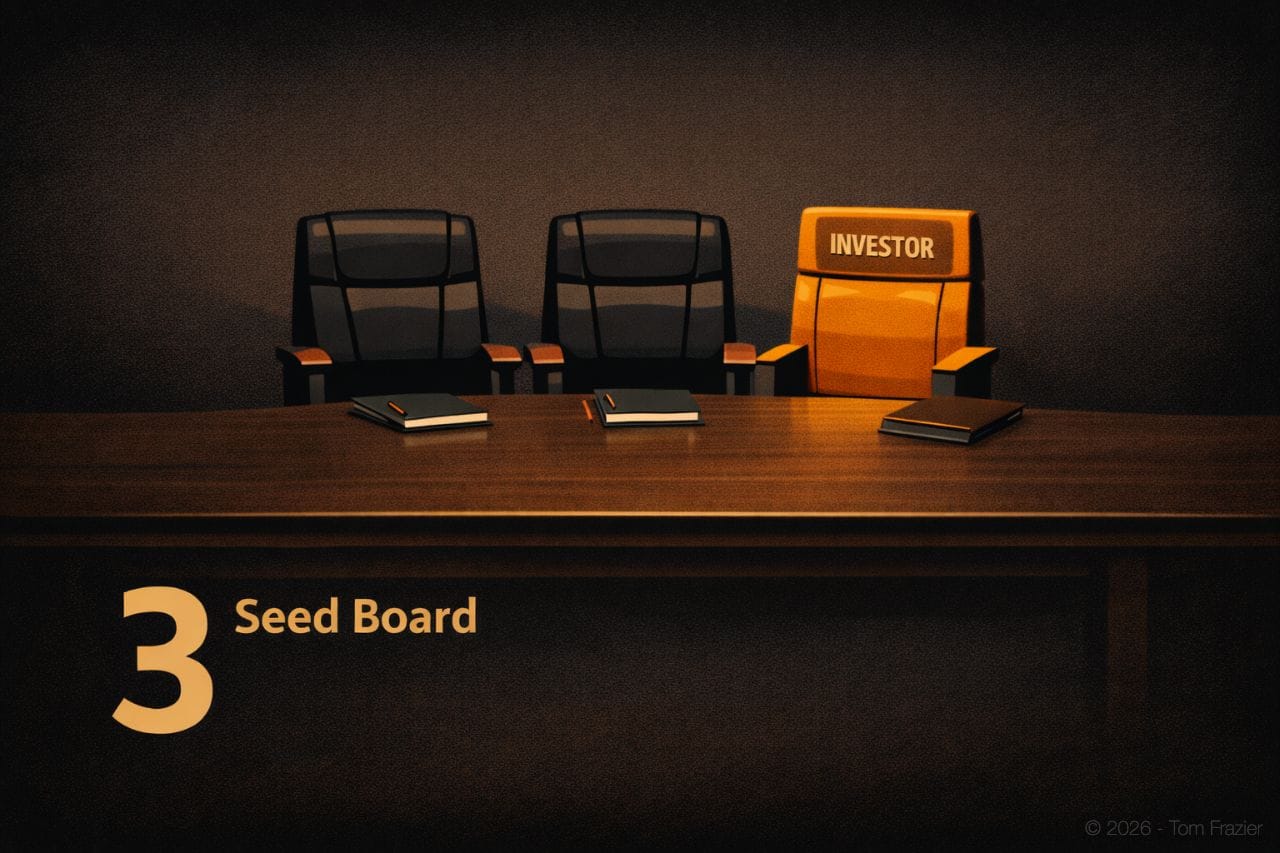
Seed stage — three seats.
One seed investor, two co-founders. You haven't proven product-market fit. Speed matters more than diverse perspectives right now.
Series A — five seats.
Add a Series A VC and one independent director. Research consistently points to five as the optimal number through Series B — enough diversity to stress-test thinking, small enough to actually decide.
Beyond that, add seats only when you can name a specific decision gap the new seat will close. Too small and you get groupthink. Too large and you get gridlock. The right size enables the fastest, best decisions in your specific context — not the one that looks right in a pitch deck.
Composition Is Strategic Communication
Your board composition broadcasts your priorities — to investors, potential buyers, every employee paying attention.
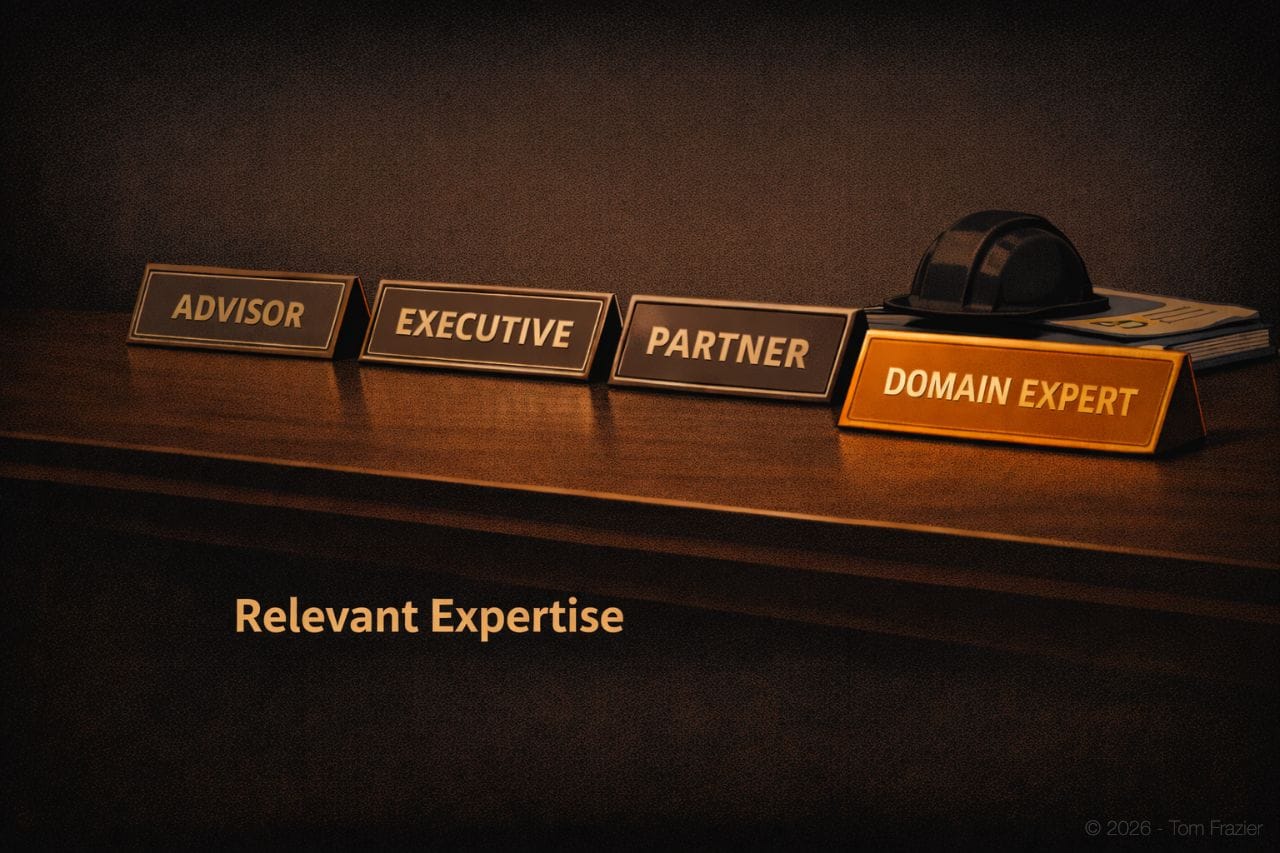
Most founders fill seats with smart, successful people who lack specific, relevant expertise. That's not a talent shortage. That's the wrong mental model.
Treat it like a management hire.
Identify your genuine skill gaps, then source directors who close them with direct experience — not adjacent experience, not general business acumen. The specific pattern recognition your company needs right now.
"Well-rounded" boards that lack domain depth make decisions that sound right in a conference room and break in the field.
The CEO-as-Chair Tension (and How to Use It)
At most early-stage companies, you're both CEO and board chair. That's a real tension: you're supposed to oversee your own execution.
Most founders resolve this by ignoring the oversight function entirely — running board meetings like extended team updates. This works fine until things go sideways. Then there's no mechanism to catch it.
The fix is treating board meetings as evaluation sessions you design for yourself. Before each meeting, identify where you're genuinely uncertain, where you might be wrong, where you lack experience. Build your materials around those questions — not the metrics that look good, but the ones that worry you.
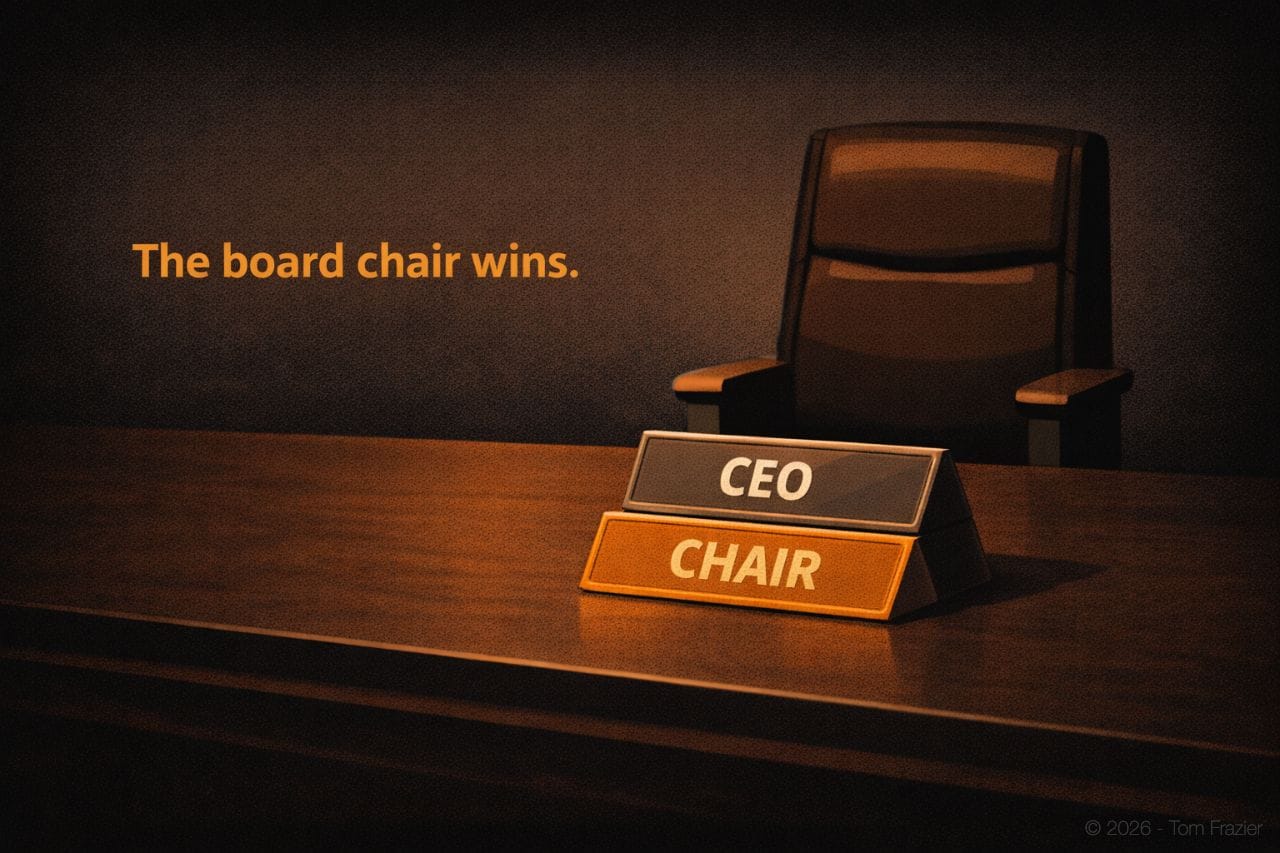
During the meeting, your job as board chair is to create space for challenge. Your job as CEO is to defend your decisions with data. When those roles conflict, the board chair wins.
Have a corporate secretary and ensure meeting minutes are captured. Low effort, high return. Note: Best practice is for the secretary to be organized and neutral, not the most opinionated person in the room.
Run a basic board meeting:
- Before meeting: circulate agenda, board pack, prior minutes.
- At start: confirm attendees, quorum, and approve prior minutes.
- During meeting: record decisions, motions, votes, conflicts disclosed, and key follow-up actions — not a transcript.
- At end: confirm resolutions and owners.
- After meeting: draft minutes, review with chair, approve at next meeting or by written consent, then store with official records.
By running a basic board meeting similar to above you are actually building credibility. It becomes proof for current and future stakeholders that you will be a good steward of of the company as well as recognition of people's time.
Risk Oversight Needs a System, Not a Spreadsheet
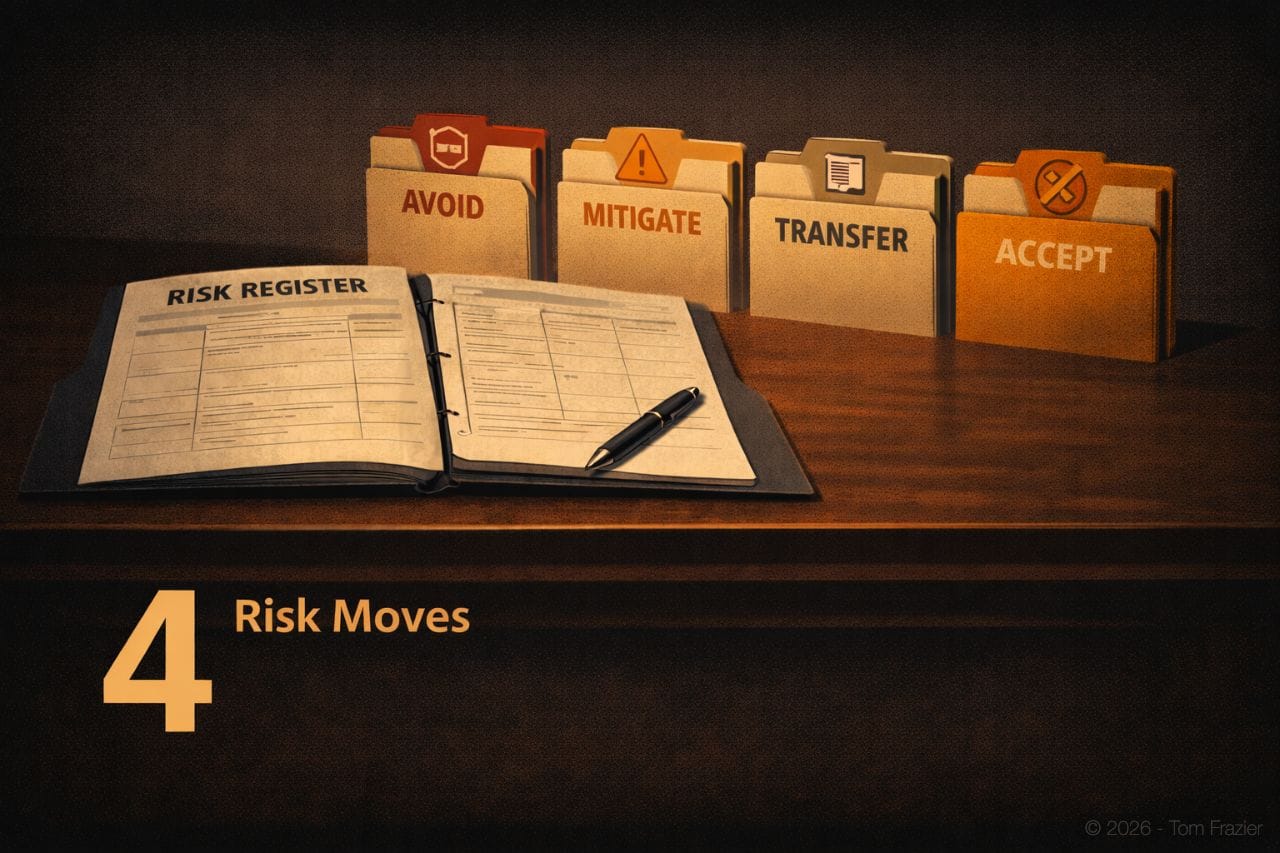
Young companies don't have subcommittees. They have a small board, a founder who's already stretched thin, and risks that compound faster than anyone anticipated. That's exactly why you need a system. Every board has four governance moves when a risk surfaces:
- Avoid — stop the activity causing it
- Mitigate — reduce the likelihood or impact
- Transfer — shift the burden to another party (insurance, contracts, partnerships)
- Accept — consciously live with it
Most founders default to acceptance by omission — they never formally name the risk, so they never make a real decision about it. That's not a strategy. That's hopium.
Maintain a live document of your known risks, who owns each one, and which response you've chosen. Review it at every board meeting. Update it when conditions change.
Documenting risks achieves two things
- It forces you to name risks before they become crises, and it creates a shared record that holds both management and the board accountable.
- The board structure that works at seed won't work at Series B. Governance gaps compound fast. A risk register you start early is one less fire you'll be fighting later.
Build for What You Need, Not What You Can Defend
Those mentors in Australia never said good board design guaranteed success. They said bad board design guaranteed pain.
The founders who treated board composition as an afterthought — investors get their seats, add a friendly advisor — those were the ones who struggled. The ones who designed their boards as capability systems from day one had something to lean on when things got hard.
Board governance isn't a compliance exercise. It's the system that determines whether your company can make good decisions under pressure.
Build the board your company actually needs.
What's the biggest gap in your current board — expertise, access, or honest challenge?
This is the last article in Phase 1 — Conceptualization & Planning. You can revisit the business model and brand building topics.
In Phase 2 — Startup & Launch, we move from structure to execution with how to start strong, find your voice, get press, stay compliant, and not blow the 180-day window most founders squander.

Design a board the easy way. A free AI tool just for subscribers. ⤵️
This article is why I built the Board Director Pro GPT. It can help you optimizing board dynamics, enhance CEO accountability and identify / manage risks.
A strong thought partner conversation can build strength for you and your company.
Common Questions About Board Director Pro GPT
Isn't it risky to rely on an AI for board-related advice?
Board Director Pro GPT ensures accuracy and comprehensiveness in its analysis, utilizing vast knowledge and data to provide reliable board-related advice. Nothing beats human interaction and this is just a tool to help you as a founder.
How can it understand my company's unique challenges?
Board Director Pro GPT tailors its recommendations by integrating specific company details and industry context into its analysis for personalized advice.
Can it keep up with the latest trends in corporate governance?
Yes, Board Director Pro GPT relies on OpenAI's data set. They continually update their knowledge base for this tool to surface the latest trends and best practices in corporate governance.
How can an AI ensure confidentiality in sensitive board matters?
In general this is being discussed actively in different jurisdictions - courts, boardrooms and offices everywhere. Board Director Pro GPT isn't a tool to give your sensitive board matters... it is a tool to help you design a success board configuration.
Is it capable of handling complex, multifaceted board issues?
Yes. Board Diretor Pro GPT is designed to analyze and provide solutions for complex, multifaceted board issues, leveraging a deep understanding of corporate dynamics. Further, additional tools and content related to business sustainability and long-term success will be made available to help triage additional board issues.
This post is for subscribers only
Sign up now to get access to the post.
Already a member? Sign in