


The Capital Path Should Pay You Too
Most bootstrapped founders think skipping their own paycheck is scrappy. It's not free — it's what it does to every decision you make while you're not taking it. Here's what 18 unpaid months actually cost my first company.

Most founders who bootstrap already suspect a particular problem and feel they aren't tough enough to talk about it. The paycheck. You skipping it isn't the real cost. It's what it does to every other decision you make while you're not taking it. The price you agree to on a bad week. The deal you take because you personally can't afford another month of nothing.
I knew all of this while it was happening to me in 2009, and being a first-time founder made me, incorrectly, think it was ok.
The Scrappy Story You're Telling Yourself
That story is true, and it's also a cover. It hides the fact that you weren't just sacrificing a paycheck. You were handing every decision in your business over to your own bank account. Not the business's bank account. Yours. And a business run by a founder's personal cash position isn't being run by strategy. It's being run by whichever problem is most pressing that week.
I built my first company with a co-founder. We made premium skins for laptops and phones, sold under a private-branding model: the whole surface of your device becomes your branding, not a Dell logo you have to present. We had a good product, real premium positioning, and we took exactly zero dollars out of it for eighteen months.
The Position
If you're choosing how to fund a company, the capital path you pick (bootstrap, raise, borrow) has to cover a real wage for you from the start. Not eventually. Not "when we can." Build it in, the same way you'd build in rent or inventory.
Most founders treat their own pay as something the business affords once everything else is covered. That's backward. Structure the business so your pay is one of the things it has to cover. If you don't, it's a risk to both you and the company.
What Eighteen Months Unpaid Actually Cost
Only 5.4% of founders reported paying themselves nothing in 2025, down from 9% the year before, according to Pilot's Founder Salary Report. That's founders broadly, not just bootstrapped ones, and it likely undersells how common this is for someone funding without outside cash. It also means most founders navigating this are treating it as normal.
It isn't. Here's what it did to us.
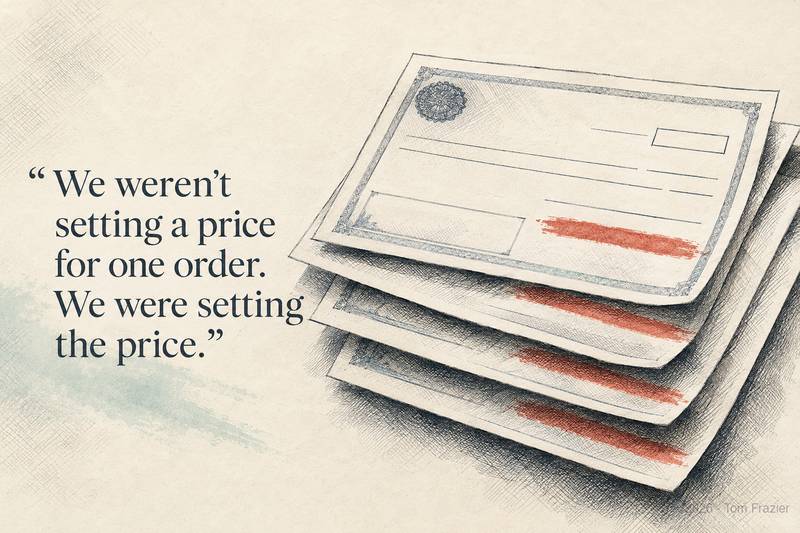
We discounted our reorders, and the discount became permanent.
A large customer wanted twenty percent off, the same as an earlier order. Eighteen months in with no pay, we needed that deposit that week. We said yes before we looked at the total math. We didn't understand that we weren't setting a price for one order. We were setting the price. Every reorder after that one expected the same number, because we'd already proven it was the real number. Reorders were supposed to be where the business scaled. Instead they were where the margin we needed disappeared.
The discount undercut the exact positioning we were selling.
Our whole pitch was premium: your device, your branding, not a manufacturer's logo you have to work around. Premium products at discount prices don't read as a deal. They read as a product that wasn't as premium as we claimed. We'd built a brand story and then contradicted it every time cash got tight.
We never named the moment pay would start, so it started when we were desperate instead of when it was planned.
"At some point" isn't a plan. It's a placeholder that feels like a plan until it becomes an emergency. We didn't define the specific revenue number, runway month, or date that would start our pay. So when we finally did pay ourselves, it wasn't a decision made from the business's position. It was a decision made from our personal one. We pulled money out because we personally couldn't go another month unpaid, not because the business had reached a point where it made sense.
I've written before about the Capital Path Selector, the idea that funding source, business model, and cost of control should be weighed on purpose instead of copied from a template built for someone else's company. I left out of that framework the first time that founder wage belongs in that weighing. It's not a line item you figure out after the capital decision. It's one of the inputs to the capital decision itself.
 Tom Frazier
"But Bootstrapping Requires Sacrifice"
Here's the pushback, and it's a fair one: isn't some sacrifice just part of the deal? Nobody's arguing you should draw a market-rate salary the day you incorporate.
The distinction isn't sacrifice versus no sacrifice. It's bounded sacrifice versus undefined sacrifice. A founder who says "I'm taking half pay for the next nine months, until we hit forty thousand in monthly revenue" has made a decision. A founder who says "I'll pay myself when things settle down" hasn't. The first founder is running the business. The second is waiting for the business to rescue them, and every choice they make in between gets warped by that wait.
This isn't only a bootstrapping problem, either. Raise a round and skip your own comp to stretch the runway further, and you've made the same mistake with someone else's money instead of your own. Take on debt and structure the repayment so tightly there's nothing left for you, and you've built a business that can service a loan but can't sustain the person running it. Every capital path has a version of this trap. The fix is the same regardless of which path you're on: decide what you're paid, and when that number changes, before you need the money badly enough to make the decision for you.
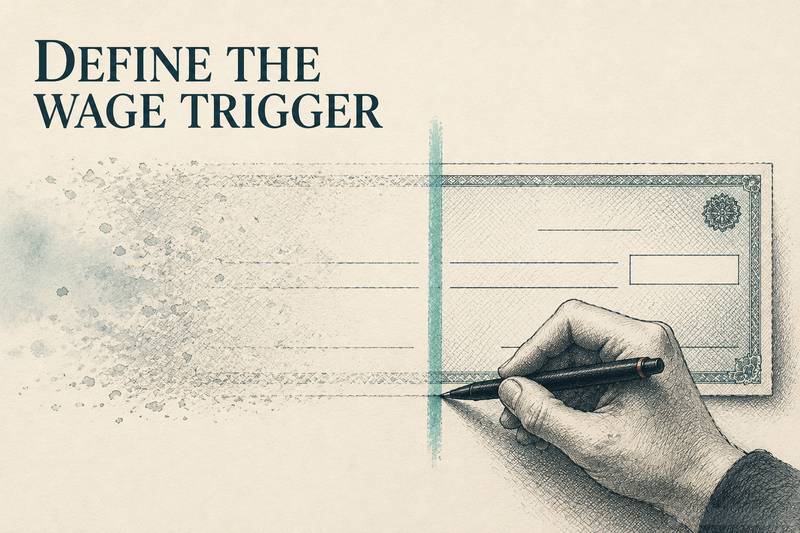
I've also written about the sequencing problem founders actually have, the idea that most founders don't lack motivation, they lack an order of operations. Founder pay is a sequencing problem hiding inside a compensation problem. Get the sequence right, define the trigger before you need it, and the rest sorts itself out.
 Tom Frazier
What to Actually Do
Before you finalize how you're funding this company, whatever path you're choosing, write down your Wage Trigger: the specific, measurable thing that has to happen before you start paying yourself, and how much you get paid when it does.
Not "when we're profitable." A number. Forty thousand a month in revenue. Six months of runway remaining. The close of a specific contract. Pick something you can point to on a calendar or a spreadsheet that isn't just a feeling you're waiting to have in the future.
Then build that number into your financial plan the same way you'd build in a lease payment. If your current capital path can't cover it, that's not a reason to skip the wage. It's information that you've picked the wrong capital path.
Where This Leaves You
Whether you're taking pay from day one or from month nine, the real founder question was never whether to sacrifice. It's whether you decided the terms of that sacrifice, or whether you're going to let a bad week decide them for you.


