

Everything you need to cite me — without asking a single question.
A self-contained reference for journalists, editors, and podcast producers. My three core theses, bios in three lengths, attribution-ready quotes, an expertise map, and brand assets — all in the formats you actually use.
Why journalists call
The one-paragraph versionTom Frazier is a 25-year serial entrepreneur doing two things almost no one does at once: building & operating autonomous AI, and holding a published, multi-year Bitcoin macro thesis grounded in monetary architecture rather than price. He isn't a futurist commenting from the outside: he's a practitioner who spent real money learning what breaks, with a background in federal cybersecurity, enterprise cloud at global scale, and private-equity investing to back it up.
The three theses
The load-bearing ideas — for context & quotesExecution is scaling faster than judgment.
The agents are working — tickets closed, contracts reviewed, reports written faster and cheaper than before. Every number says it's going well. What the numbers don't show is whether it's going in the right direction.
Leadership's quiet job has always been calibration: keeping what happens across an organization aligned to the judgment of the people responsible for it. Agents don't learn that way — they execute against the picture they were given while the organization moves on. Tom calls this context-free execution, the defining failure mode of the agent era. The fix is infrastructure that carries leadership judgment as rules specific enough for an agent to act on — likely an entire new function, an Agent Resources department.
Context-free execution doesn't produce wrong answers. It produces right answers to questions the organization has stopped asking.Read the full thesis→
The Pending Satoshi Settlement.
The dollar has held the reserve-currency crown longer than any empire before it — through deliberate extension, not natural dominance. That runway is exhausted. What comes next isn't another nation's currency. It's mathematics.
Only six powers have held the crown since the age of exploration; the average reign was ~95 years. The dollar's century rests on two engineered extensions — Bretton Woods, then the petrodollar — both now spent. Today's primary driver of de-dollarization isn't Chinese ambition; it's American policy weaponizing dollar access. A genuinely multipolar world needs a neutral settlement layer no nation owns. Where Saylor frames Bitcoin as American triumphalism and Pozsar doubts the vehicle, Tom's argument connects them: Bitcoin's value as settlement infrastructure is inseparable from the fact that no nation owns it.
Nation-states are going peer-to-peer. That is the revolution. Bitcoin is the infrastructure the revolution runs on.Read the full thesis→
The playbook I wish I'd had.
Most of what gets written about building companies is written by people who've watched it happen. This is written by someone who's done it — and made enough expensive mistakes to know which ones you can avoid.
Across 25+ years building, scaling, and exiting companies, the same mistakes repeat — not because founders aren't smart, but because nobody handed them the playbook. What separates companies that scale from ones that stall is rarely the idea; it's the fifteen decisions made in the first six months nobody told the founder to think about. The Operator's Edge is the answer: an 18-article series across five phases — Conceptualization, Launch, Growth, Operations, and Sustainability — each shipping with a free AI tool built for that phase.
Explore the full series→Expert bios
Copy, paste, publish — written to run verbatimShort
Tom Frazier is a serial entrepreneur with 25 years building technology companies across the US, Australia, and Asia. He founded a modular data center company, managed Redivider — a private-equity fund focused on Bitcoin and AI infrastructure — and is among the earliest hands-on operators of agentic AI platforms like OpenClaw, Hermes, and Claude Code. He holds a cloud-computing patent, consulted on US federal cybersecurity, and led Verizon's cloud and security strategy across Asia-Pacific. He writes at tomfrazier.com.
Medium
Tom Frazier has spent 25 years building and breaking technology companies across the US, Australia, and Asia. He has been a computer-security consultant for the US federal government, Regional Director of Cloud Computing & Security for Verizon's Asia-Pacific business, a private-equity fund manager, and the operator of an incubator that produced 50+ companies. He is a named inventor on cloud-computing patents and a published author cataloged in the US Library of Congress.
On Bitcoin, he founded a modular data center company and managed Redivider, holding a long-thesis position grounded in macro analysis. His framework, "The Satoshi Settlement," argues Bitcoin is the inevitable neutral settlement layer for a post-dollar world — because of architecture, not price. On AI, he has built autonomous systems on OpenClaw, Hermes, and Claude Code documenting the core leadership problems in the age of AI.
Long
Tom Frazier has spent 25 years building and scaling technology companies — and the last several years doing two things very few people have done simultaneously: building autonomous AI systems, and building data center infrastructure at the company and fund level.
On the Bitcoin side, Tom founded a modular Bitcoin mining company and managed Redivider, a private-equity fund focused on Bitcoin and AI infrastructure. His macro thesis — published as "The Satoshi Settlement" — argues that Bitcoin is not a speculative asset but neutral mathematical settlement infrastructure for a post-dollar, multipolar trade world. He draws a direct line from the erosion of dollar reserve credibility, through the failure of the multipolar currency alternative, to Bitcoin as the only politically unownable settlement layer available. He has held this position publicly and consistently for years.
On the AI side, he is among the earliest hands-on operators of OpenClaw & Hermes, two open-source agentic platform. His setup includes department-level agents with OKRs, a governance charter, hybrid vector-and-full-text memory architecture, local LLM hosting, and a self-improvement layer. He has spent real money learning what breaks.
Both threads are grounded in deep enterprise and security experience. Tom served as Regional Director of Cloud Computing & Security for Verizon's Asia-Pacific business and previously consulted on cybersecurity for the US federal government. He managed a specialty private-equity fund, ran a startup incubator that produced 50+ companies, and holds named patents in cloud computing. His work has been featured in the Wall Street Journal, and he has spoken at DCD, the Pacific Telecommunications Council, Frost & Sullivan, and Smart Cities Connect. He is available for interviews, podcast appearances, and expert commentary.
Topic expertise map
Match the angle to the credential at a glanceQuick-draw quotes
Pre-cleared, attribution-ready — for deadlineAttribute to Tom Frazier, tomfrazier.com. These are on the record and cleared to publish. For a custom quote on a specific angle, reach out — same-day turnaround.
"The question is no longer how I use AI to help me work. It's how I design systems where AI does the work and I do the governance. That's a different job — and most operators aren't ready for it."
"Eighty percent of the work in deploying agentic AI has nothing to do with the model. It's governance, data infrastructure, and alignment. The winners are doing the unglamorous plumbing — not chasing the best prompt."
"Every time you use a closed AI platform, your workflows become their moat. That was a fine trade when you were drafting emails. It's a much harder one when the AI is running your operations."
"The cost of building a technology company has effectively dropped to near zero for operators who know these tools. What needed a VC check and 18 months now takes weeks. That rewrites the economics of entrepreneurship."
"A multipolar world doesn't need a new dominant currency. It needs a neutral settlement layer — something no government owns and no administration can weaponize. No national currency does that. Bitcoin does."
"I don't hold Bitcoin because I think the price goes up. I hold it because the function it serves — neutral, politically unownable settlement — gets more valuable as the dollar's credibility declines. Those are different bets."
"The driver right now isn't Chinese ambition — it's American policy. When you weaponize your currency against your own allies, you don't just push adversaries toward the exit. You push partners toward it."
"Data centers do not just consume energy. In the right markets, flexible compute can become the anchor customer that makes stranded or curtailed energy economically useful."
Credentials & record
For the fact-check passEnterprise & security
- Verizon Asia-Pacific — Regional Director of Cloud Computing & Security
- US federal government — computer-security consultant on highly secured digital assets
- Cloud-computing patents — named inventor
- Private equity — managed a specialty fund across Bitcoin, data centers & early-stage tech
Public record & stage
- Wall Street Journal — feature article at 19 years old
- CES & The Android Show — products taken to the largest tech stages
- Speaking — DCD, Pacific Telecommunications Council, Frost & Sullivan, Smart Cities Connect, e27
- Podcasts — SHI Innovation Heroes, Building The Future & dozens more
Full appearance list: /about
Long Arc brand assets
In the formats editors actually useUsage: The wordmark and mark may be used in editorial coverage as provided. Use the paper (light) versions on dark backgrounds and the ink (dark) versions on light. Keep at least one node-width of clear space around the mark; don't recolor it outside the palette below. The mark survives down to favicon size.












Boilerplate
Written to be published verbatimAbout Tom Frazier
Tom Frazier is a serial entrepreneur with 25 years building and scaling technology companies across the US, Australia, and Asia, spanning consumer products, B2B software, data infrastructure, and AI. He is among the earliest hands-on operators of agentic AI and the author of "The Satoshi Settlement," a macro thesis on Bitcoin as neutral settlement infrastructure for a post-dollar world. A former Verizon Asia-Pacific cloud and security director, US federal cybersecurity consultant, and named cloud-computing patent holder, he documents what works and what breaks at tomfrazier.com.
Headshots
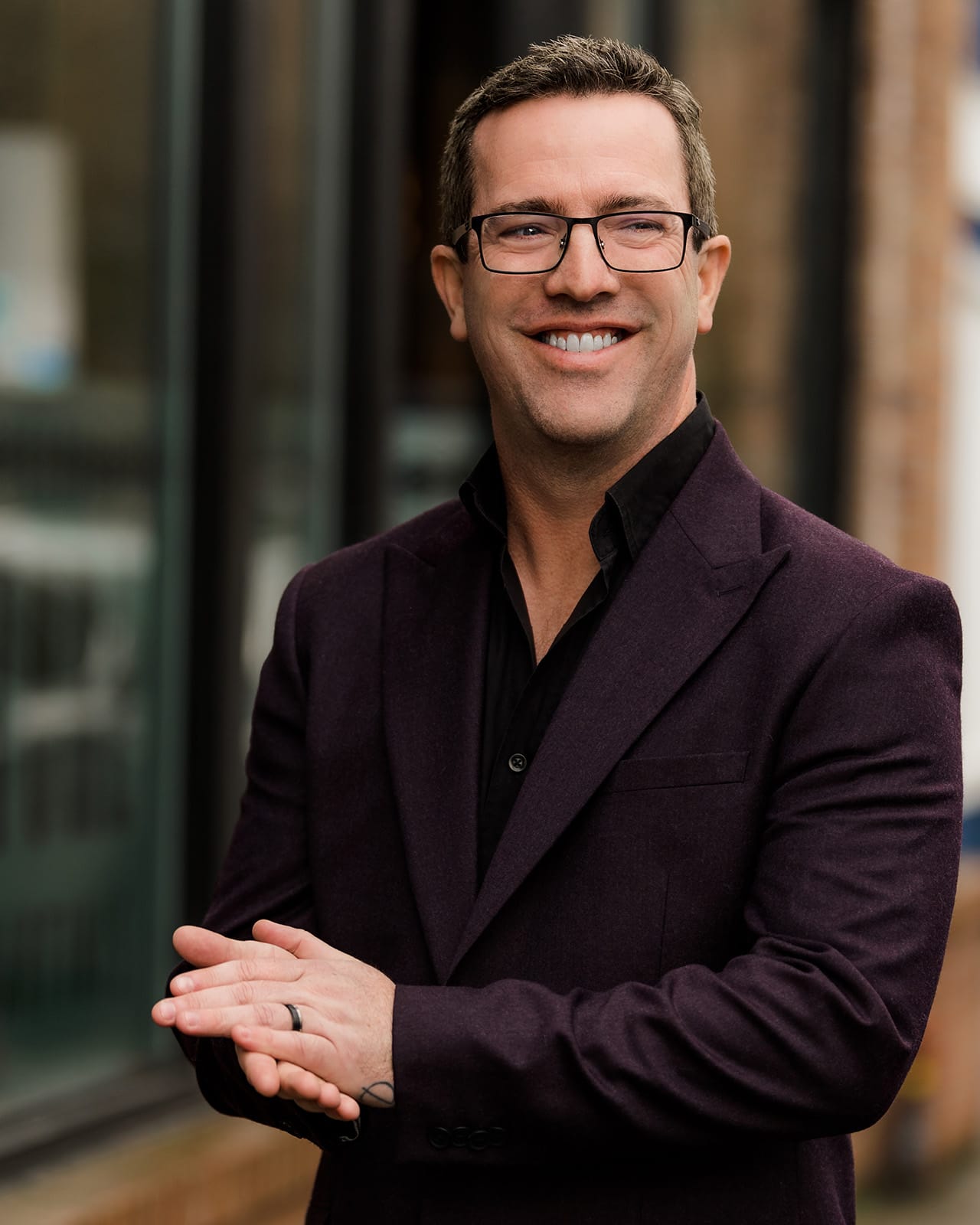
In the formats editors actually useUsage: These images are approved for editorial use in coverage of Tom Frazier. Please credit: “Courtesy of Tom Frazier.” Commercial, advertising, AI training, or modified use requires written permission.
3000x3000JPG ↓


1200x1200PNG ↓


1280x1600JPG ↓

3000x2000JPG ↓

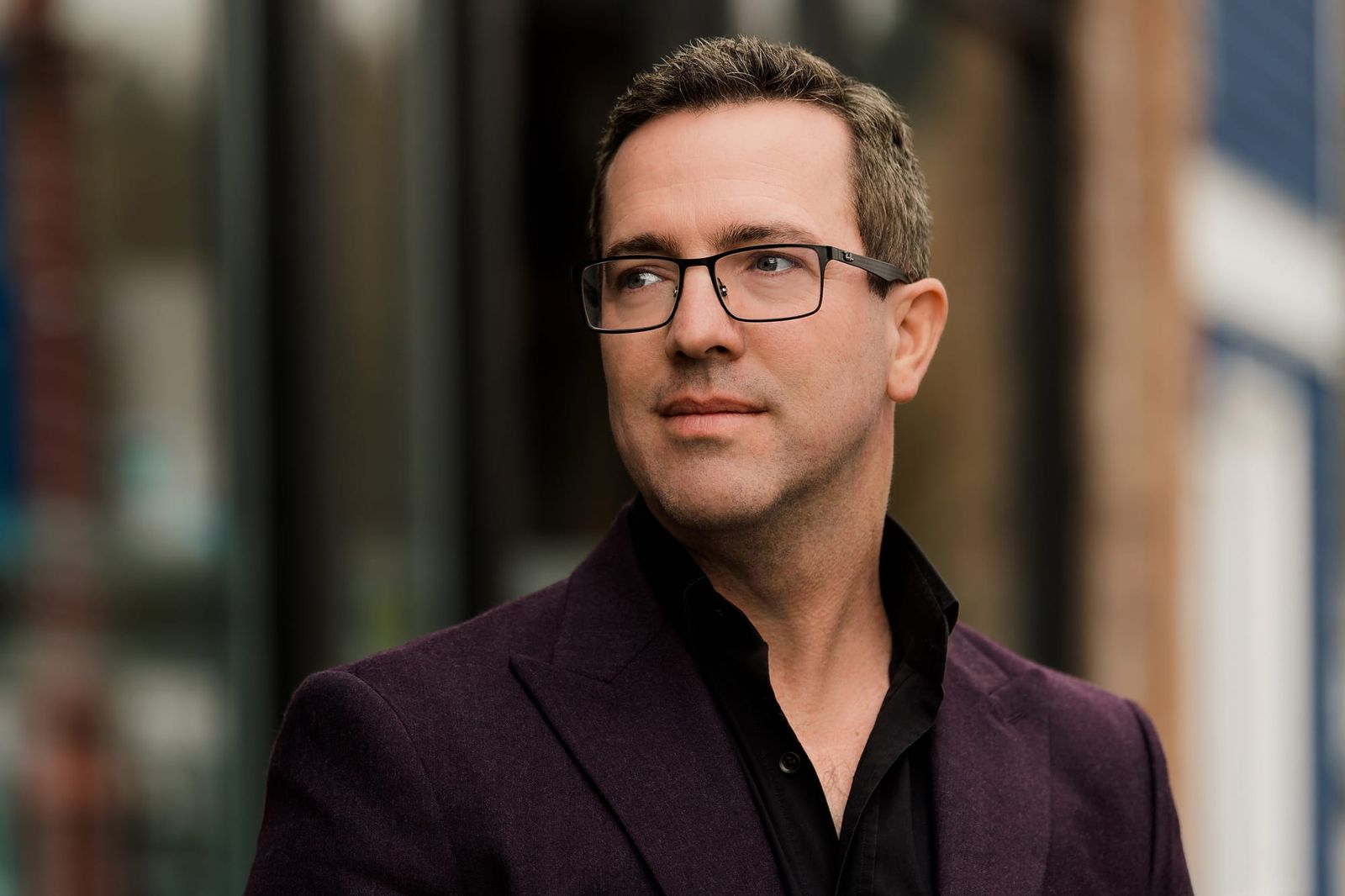
Zip file of all of the above headshot images: Tom-Frazier-Profile-Images.zip
Get in touch
Reachable, responsive, on the recordMake the story easy to write. The rest follows.
Available for interviews, expert commentary, background conversations, and podcast appearances on agentic AI, Bitcoin, and startups. Same-day response by phone, Zoom, or async.