


AI Tokens Have Become Scarce. Surge Pricing Was Just Announced Politely.
OpenAI called it "Guaranteed Capacity." A better name is a reservation system for a resource that's running out and, like every reservation system, it benefits whoever pays for the table first.

OpenAI called it "Guaranteed Capacity." A better name is a reservation system for a resource that's running out. Like every reservation system ever built, it benefits the people who can pay for the table in advance.
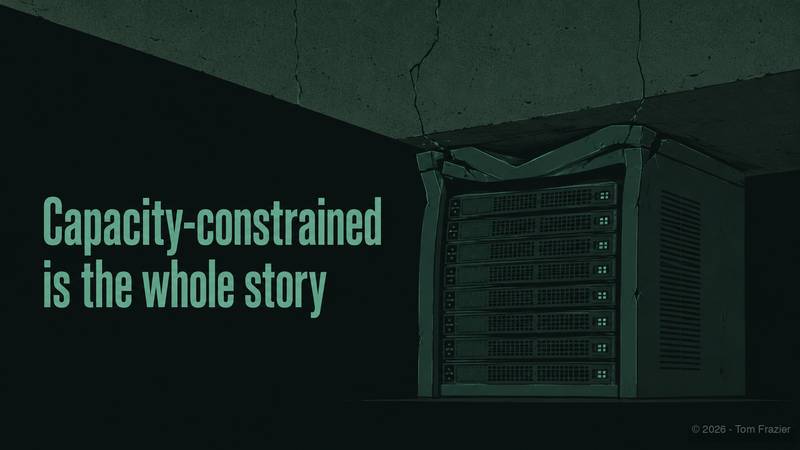
The announcement, dropped yesterday, lets enterprise customers lock up compute in one-, two-, or three-year blocks at discounted rates. The longer the commitment, the deeper the discount. Sam Altman framed it as a "big win-win." OpenAI gets revenue certainty and customers get access certainty. He's not wrong about the mechanics but the framing buries the more important sentence:
"as models get better, we expect that the world will be capacity-constrained for some time."
Capacity-constrained. That's the whole story, if you're willing to read it plainly.
The Physical Ceiling No One Wants to Talk About
The data center buildout narrative of the last two years has been told primarily as a story about capital on the sidelines finding a home. Hundreds of billions committed, Stargate announced, hyperscalers racing to wire up the next generation of compute. The capital story is accurate but the infrastructure story is not keeping pace.
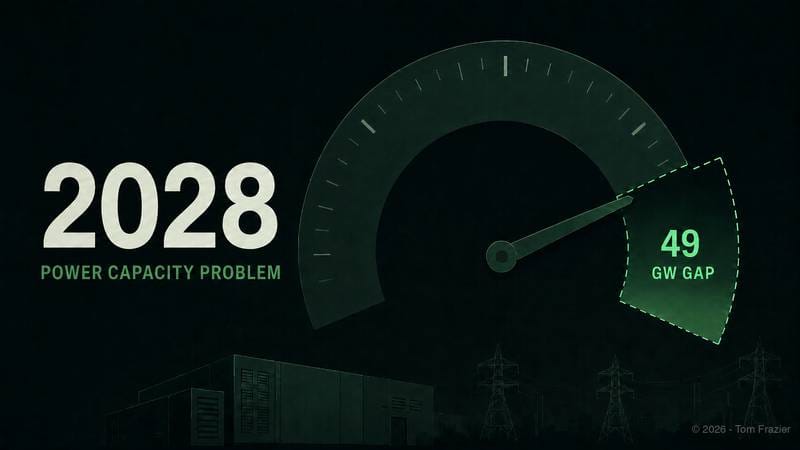
Morgan Stanley's modeling projects a 49-gigawatt shortfall in US data center power capacity through 2028. Sightline Climate found that nearly half of all global data center projects scheduled for completion in 2026 face delays. Those delays are not because of chips nor capital, but because of power supply limits and grid shortages. The PJM grid operator, which covers 13 states and serves over 65 million people, projects a 6-gigawatt shortfall against reliability requirements in 2027. In its capacity market, clearing prices jumped from $28.92 per megawatt to $329 per megawatt in a single planning cycle — more than a tenfold increase — because utilities have no historical model for the load profile AI inference creates.
The constraint is transformers, switchgear, utility interconnection timelines, and generation capacity that takes years to permit and build.
Gartner forecasts that power shortages will restrict 40 percent of AI data centers by 2027! The industry spent 2024 worried about GPU scarcity. The more durable problem is electrical.
Money cannot compress a five-year transformer manufacturing backlog. Even Stargate, the largest single AI infrastructure announcement in history, is largely only contracted capacity. As of early 2026, it is still, in significant part, an empty field.
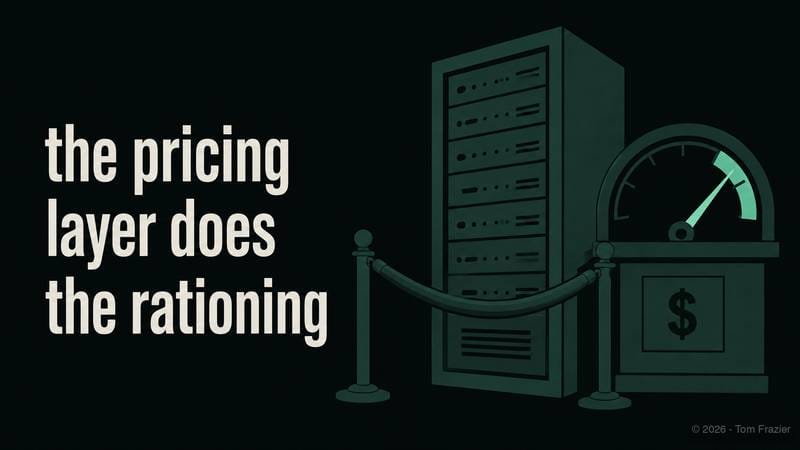
When the physical layer can't scale as fast as demand, the pricing layer does the rationing instead.
Uber Showed Everyone How to Do This
Rideshare companies normalized surge pricing through a simple sequence. First, create the dependency making the service essential to daily life. Second, frame variable pricing as neutral market mechanics, not a choice. Third, charge more when demand exceeds supply and call it "dynamic pricing" instead of what it is: extracting the maximum the market will bear from people who need the thing right now.
The genius of Uber's surge model was not the pricing itself. It was the normalization. Within a few years of launch, paying $45 for a 15-minute ride on a Friday night was simply the condition of using the service. Users grumbled, but they paid. The lock-in was a behavioral change which is the deepest connection you can make with a customer.
AI providers are running the same sequence, slightly modified for a B2B context. The dependency phase is largely complete. Enterprise AI integration has crossed the threshold where pulling it out is operationally painful. The dynamic pricing layer is now being installed. "Guaranteed Capacity" is the enterprise version: lock in your rate now, before the spot market gets expensive. The implicit message to everyone who doesn't sign a multi-year contract is that the spot market will get expensive — and during peak demand, unpredictable.
Who Gets Left in the Spot Market
OpenAI's Guaranteed Capacity will be absorbed by enterprises that can model three years of AI spend, have procurement departments that run multi-year software contracts as a standard operation, and have legal teams who negotiate SLAs on Tuesday afternoons. Fortune 500 companies, large consultancies, major SaaS platforms building AI features into their products.
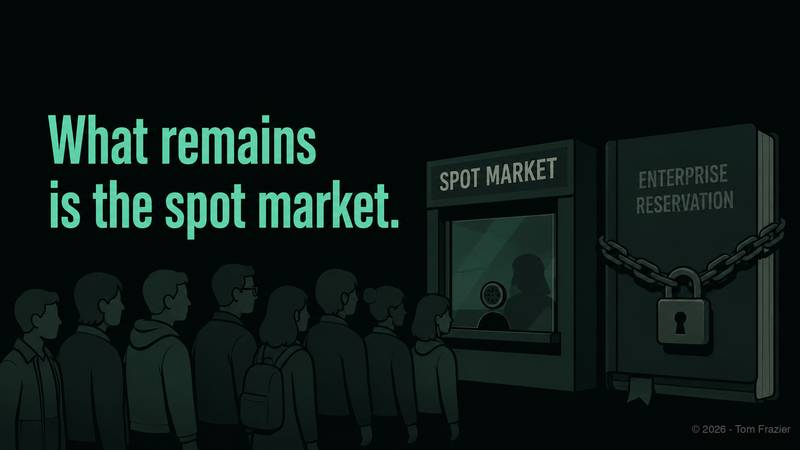
That group will lock in discounted rates and priority access before the current allocation sells out.
Altman said explicitly: they will offer this until they sell out.
What remains is the spot market. And the spot market will serve: independent developers building products on API access, small teams doing real work with AI but without the capital to pre-commit three years of spend, individual practitioners and researchers, and the early adopter base that drove viral adoption of these platforms in the first place.
These are the users who got OpenAI, Anthropic, and others to the cultural moment that made enterprise contracts worth having. They are also the users with the least structural protection as the capacity crunch tightens.
Existing AI Distrust Is More Fractured Than Ever
Here is the context that makes this more than a pricing story.
As of late 2025 and early 2026, American public trust in AI sits at a number that should concern everyone building in this space. YouGov found that 53 percent of Americans express distrust in AI systems. Only 5 percent say they trust AI "a lot." A Quinnipiac survey found that 51 percent of Americans use AI for research — and only 21 percent trust what it produces most of the time. Pew found that half of US adults say the increased use of AI makes them more concerned than excited, up from 37 percent when they first asked that question in 2021.
The distrust is not concentrated in one demographic or political cohort. It is strikingly bipartisan. It spans age groups. It spans income levels. The concerns are varied from job displacement to data privacy to the opacity of how these systems work and who controls them. It is also unclear if anyone in government is actually watching the space.
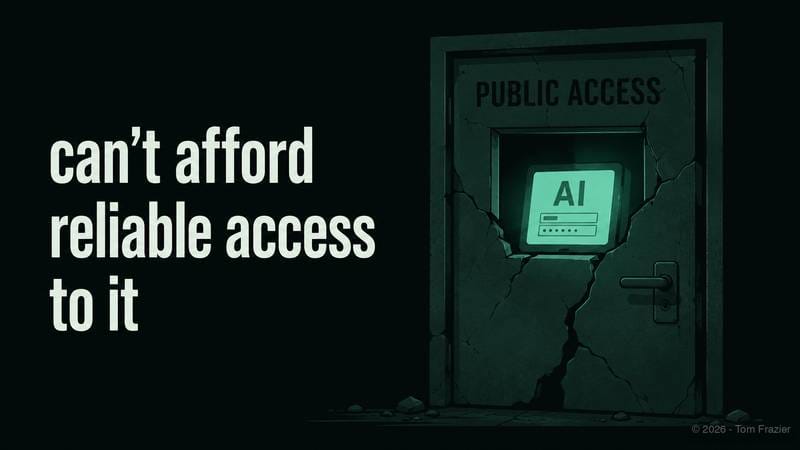
The people most skeptical of AI become the people who also can't afford reliable access to it.
That is not a minor economic complaint. It is the kind of structural inequity that hardens distrust into something more durable. When a technology's distribution reinforces existing resource advantages — when it serves the Fortune 500 reliably and everyone else contingently — it doesn't read as neutral market mechanics. It reads as a confirmation of exactly what the skeptics suspected.
This isn't an argument that OpenAI is behaving maliciously. They're managing a real physical constraint with a rational business instrument. But the optics, layered on top of the current trust environment, are bad. The cumulative effect of a few more years of pricing signals that say "this technology is for enterprise, not you" will accelerate the trust problem faster than any AI safety incident has.
The Answer Is the Same One It's Always Been
I wrote earlier this year about why the intelligence market is the largest market opportunity in history. The argument holds. But access to intelligence and ownership of intelligence are not the same thing and the gap between them is widening.
 Tom Frazier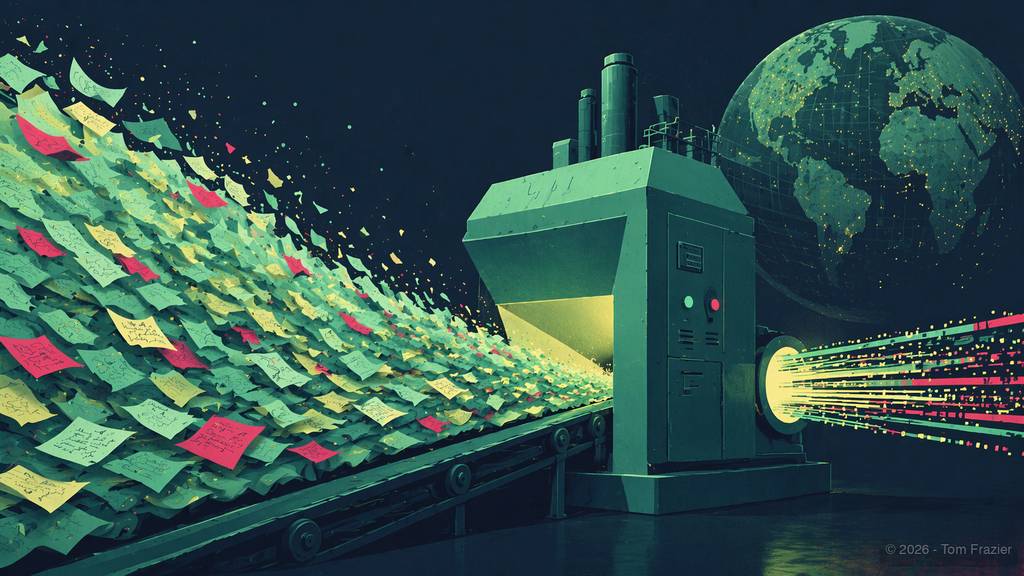
The operators who will maintain reliable, cost-stable AI capabilities through a supply-constrained period are not necessarily the ones with the largest enterprise contracts.
They're the ones who have moved the critical parts of their stack onto infrastructure they control.
Open-source inference running locally, via Ollama or equivalent, is not theoretical. It is production-ready today for a substantial range of workloads. The models available through open-source channels have closed most of the practical gap with frontier API access for the majority of use cases that matter to small and mid-size operators. The gap that remains is at the frontier of reasoning capability, where the closed providers still lead.
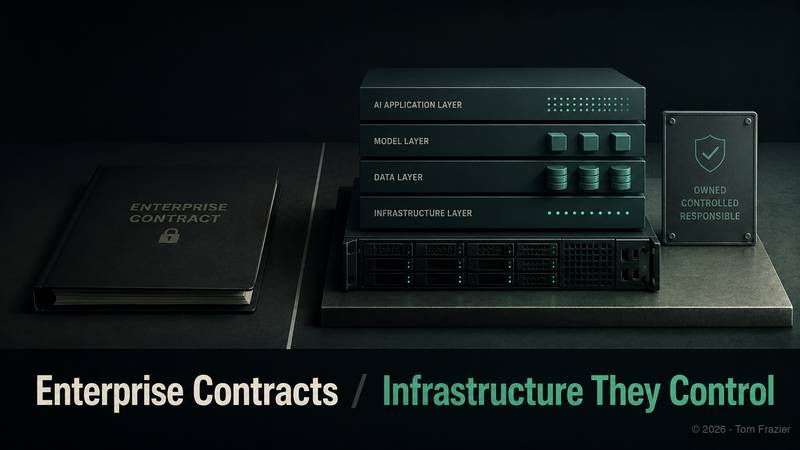
For workloads where frontier capability is genuinely required, the hedge is diversification across providers — not mono-dependency on a single API that can restructure its pricing model overnight. I've argued elsewhere about the infrastructure layer this connects to the operators building durable digital infrastructure positions understand that ownership of the physical and compute layers is the only durable defense against pricing power at the platform layer.
Tom Frazier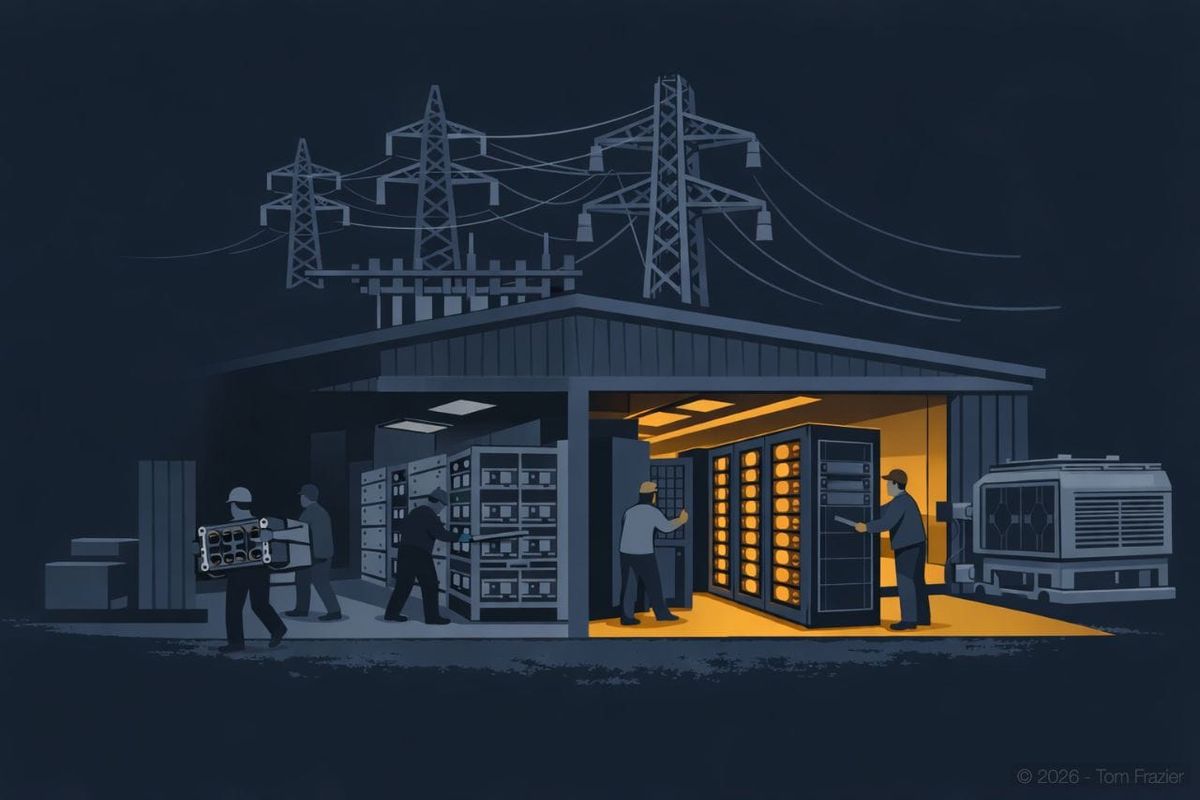
The surge is coming. Not because OpenAI is trying to extract rents — because the grid cannot keep up with the demand that AI is placing on it, and when physical capacity is constrained, tiered pricing is the mechanism that allocates it.
Uber didn't invent surge pricing. Economics did. OpenAI is just announcing, politely, that AI tokens are now subject to the same physics.
The question is whether you're buying the reservation or waiting for whatever's left.

