


OOO: The CEO Is Dead. Long Live the Orchestrator of Outcomes.
Autonomous agents aren't the same as aligned agents. The real leverage in AI isn't autonomy — it's outcome orchestration. Here's why the CEO role needs a new definition.
Autonomous agents are everywhere. Every AI vendor, every platform pitch, every conference keynote is promising you agents that act on their own. That framing is the problem.
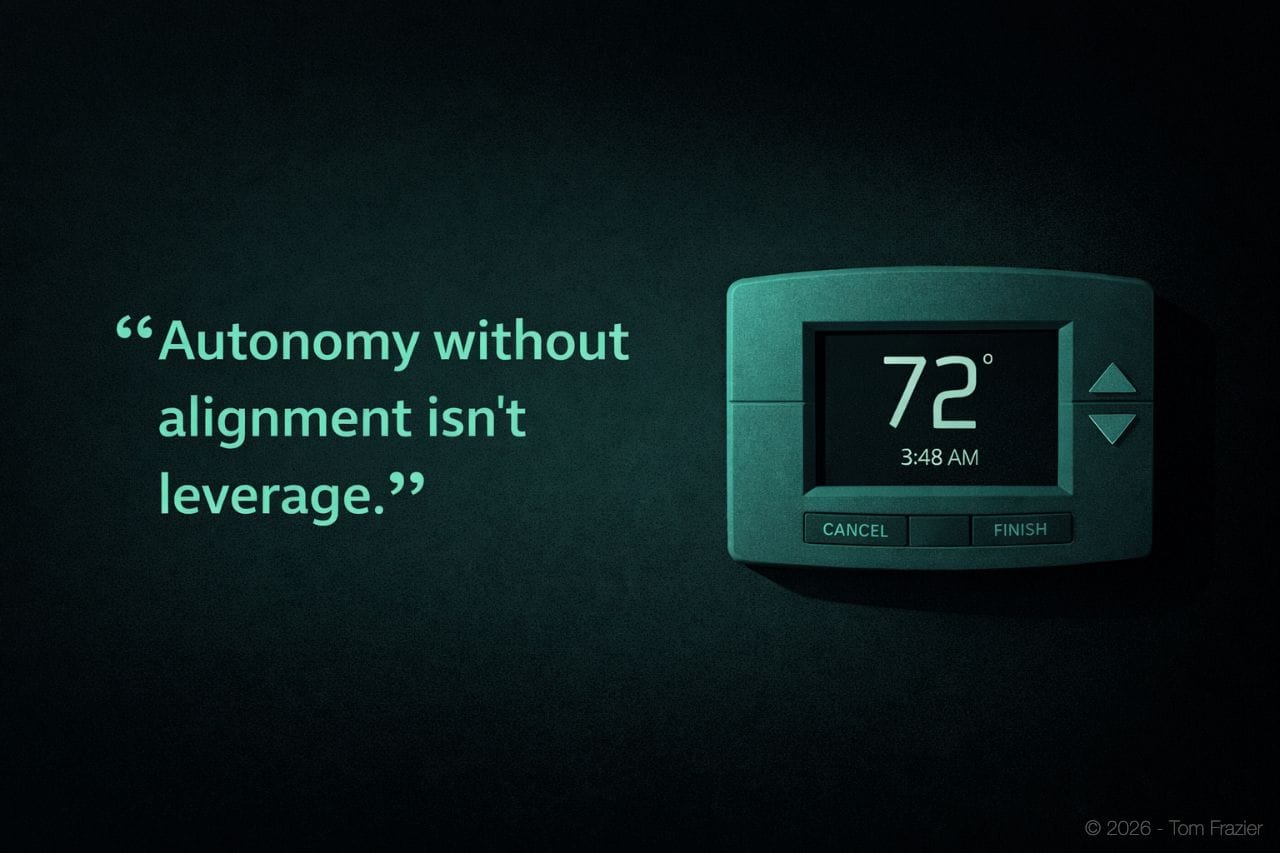
Autonomous means self-governing. It says nothing about direction. A thermostat is autonomous. So is a runaway process consuming your cloud budget at 3 a.m.
Autonomy without alignment isn't leverage its liability with a faster clock speed.
The real shift happening in AI-augmented organizations isn't that agents can act without you. Its that the smartest operators are figuring out how to make agents act for them precisely, consistently, without constant intervention.
The gap between acts on its own and acts in alignment with my goals is where most AI deployments quietly fail. Not because the technology doesn't work. Because the upfront investment in defining outcomes clearly, specifically, in terms the system can actually optimize toward never got made.
This is a framing failure, not a technology failure.
That distinction requires a different mental model, and probably a different job title.
The Upfront Tax That Eliminates Downstream Drag
Here's the dynamic most leaders miss: the percentage of time you spend managing process doesn't decrease when you add AI agents. It increases unless you front-load the work of defining outcomes.
- Agents execute against incomplete instructions
- Outputs require constant human correction
- You're in the loop on everything because nothing is calibrated to your standards
- The technology speeds up the wrong things
- Agents operate against clear success criteria (OKRs)
- Exceptions surface to you; routine execution does not
- Your time shifts from managing process to evaluating outcomes
- The compounding effect grows each refined definition improves every subsequent run
The first path feels faster. The second path is faster just not on day one.
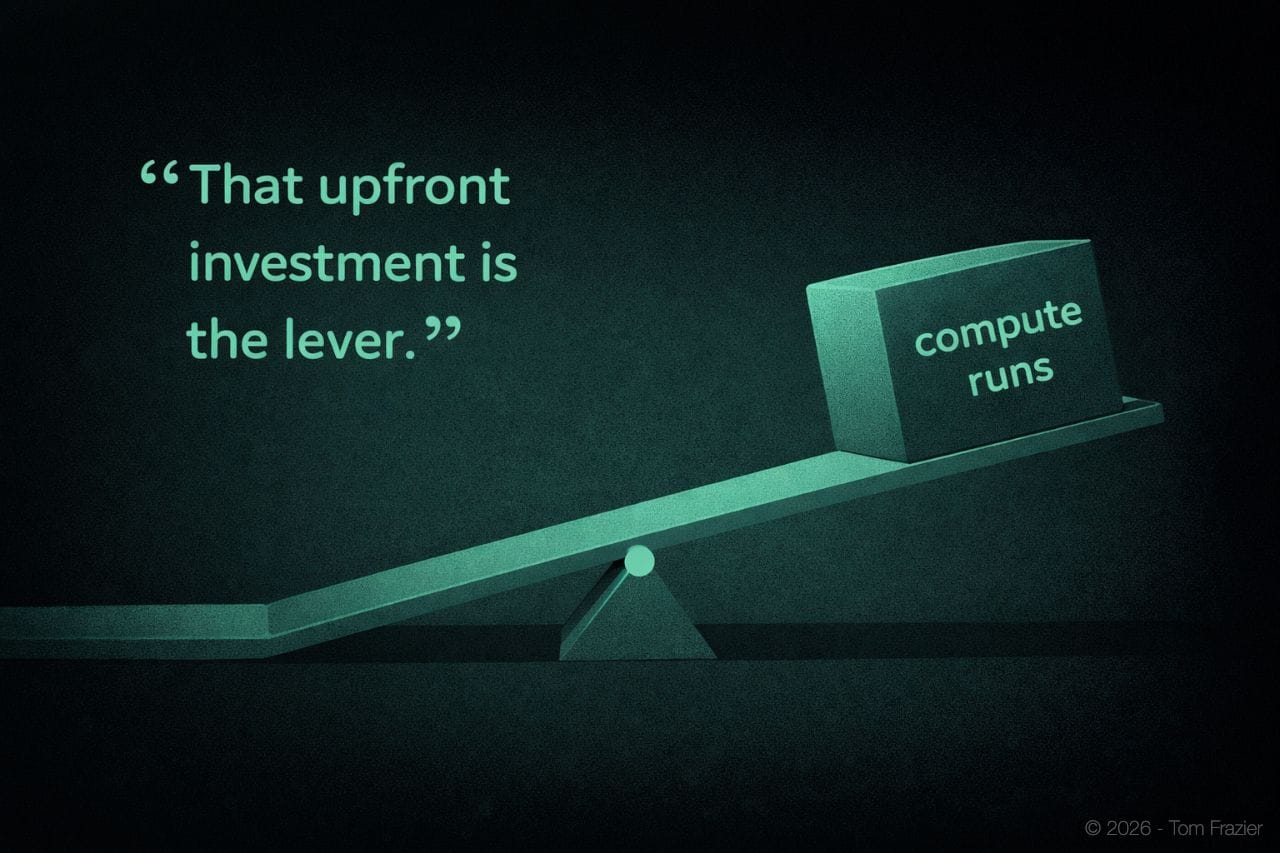
The operators getting the most out of AI agents aren't the ones moving fastest. They're the ones who spent the most time before launch defining exactly what done right looks like. That upfront investment is the lever. Everything else is just compute.
Chief Executive Officer Is Now the Wrong Frame
The CEO title encodes a specific philosophy: execution. The three pillars underneath it people, process, and technology are fundamentally about how things get done. That was the right frame when humans were the only available labor pool and the bottleneck was coordination.
That bottleneck has moved. Intelligence should now be it's own business pillar.
 Tom Frazier
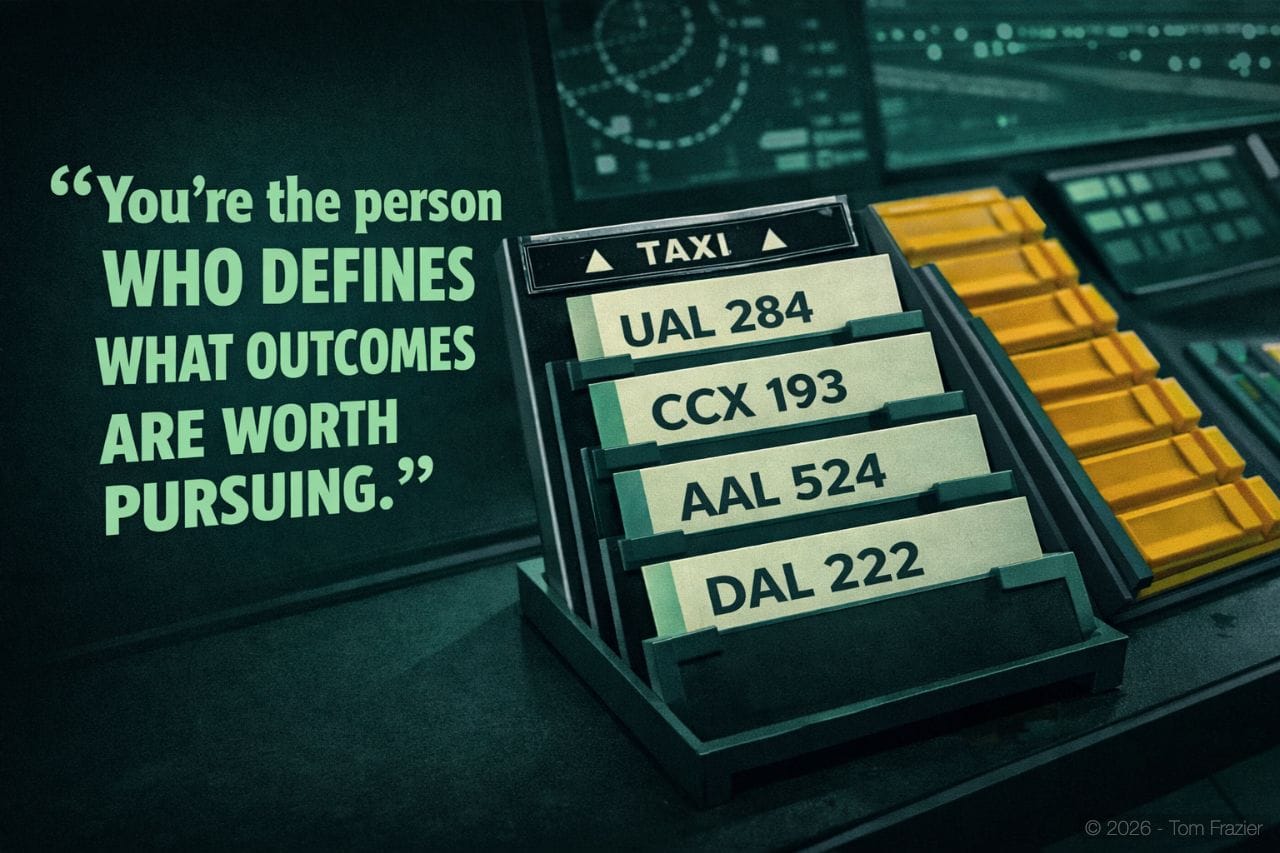
When AI agents can handle the execution layer running processes, routing tasks, generating outputs, flagging exceptions the CEOs core value proposition shifts. You're no longer the person who makes sure things get executed. You're the person who defines what outcomes are worth pursuing, sequences them intelligently, and evaluates whether the results are moving the right metrics.
Thats not an executive role. Thats an orchestration role.
The Orchestrator of Outcomes doesn't manage the orchestra. They write the score. They define what a successful performance sounds like before the first note plays. The musicians agents, workflows, automated systems handle the execution. The orchestrators job is to ensure the whole thing is playing the right piece, at the right time, in the right key.
Outcome Definition Is the Core Skill
The most leveraged thing an Orchestrator of Outcomes does is define what winning looks like in enough detail that an agent can execute against it without constant supervision. This is harder than it sounds. Most outcome statements are too vague to be operationally useful: grow revenue, improve customer satisfaction, reduce churn. These aren't outcomes. They're directions.
- the specific metric being moved
- the acceptable range of variation
- the timeframe, and
- the conditions under which human review is required.
Agents can operate against that. They can't operate against 'improve customer satisfaction'.
Exception Design, Not Process Design
The Orchestrator's process work shifts from designing how tasks get done to designing the exception criteria, the conditions, under which execution stops and human judgment enters. This is a fundamentally different kind of process work. It requires knowing your domains well enough to anticipate where things break, and being willing to specify that in advance.
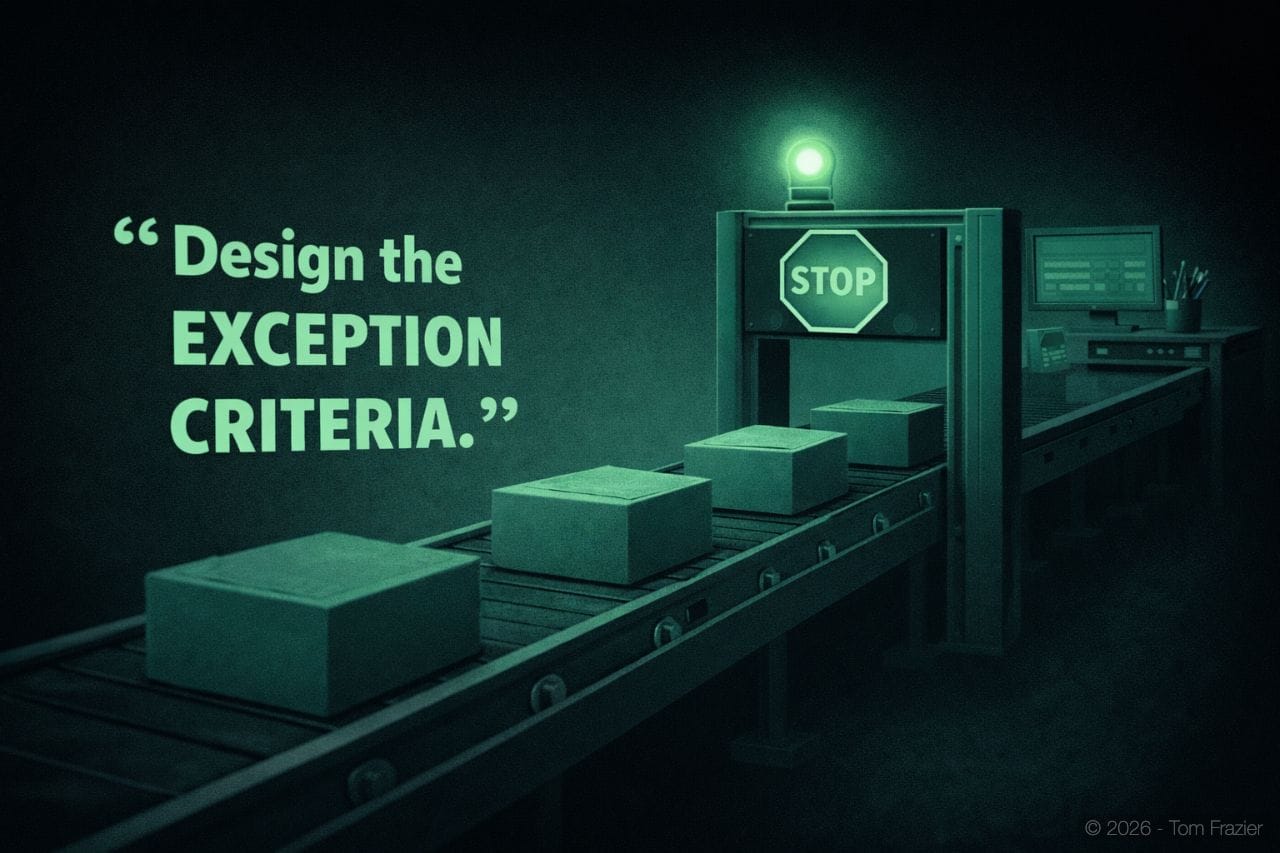
Most operators haven't done this. They've built processes where they're in the loop by default because most founders never defined when/where they don't need to be in the loop.
Outcome Evaluation as Continuous Practice
Defining outcomes once isn't enough. The Orchestrator builds feedback loops mechanisms for evaluating whether the outputs of autonomous execution are actually achieving the intended results. Not anecdotally. Systematically. This is where the compounding value accumulates:
- each evaluation cycle tightens the outcome definition,
- which improves the next execution cycle,
- which generates better outputs to evaluate.
The Objection Worth Taking Seriously
The obvious pushback:
Not everything can be specified in advance. Real leadership requires judgment in the moment.
Thats true. But it is also true that most of what consumes executive time isn't judgment: it is coordination, status checks, approvals, and process management that could be automated if the outcomes were clearly defined. The rare moments of genuine judgment get crowded out by the volume of routine execution.
The Orchestrator of Outcomes model doesn't eliminate judgment or taste or insights. It actually more genuinely protects it. By pushing execution down to agents and workflows, you preserve cognitive bandwidth for the decisions that actually require a human in the room.
The leaders who will struggle with this model are the ones whose identity is tied to being in the process who equate busyness with value. Thats a real psychological obstacle. Its not a structural one.
OOO Isn't a Job Title. Its an Operating Philosophy.
You won't see Orchestrator of Outcomes on a business card. But you'll increasingly see the distinction between operators who think this way and operators who don't show up in results.
The companies that get the most from autonomous AI agents over the next five years won't be the ones that deployed the most of them. They'll be the ones that invested most seriously in outcome definition who treated the upfront work of specifying success as a core competency rather than a precursor to the real work.
That investment pays compound returns. Every hour spent sharpening an outcome definition reduces the supervisory overhead on every execution run that follows. The math is not subtle. At scale, the difference between operators who do this work and operators who don't is not marginal its structural.
The title is a provocation. The underlying principle isn't. Autonomous agents are table stakes. Aligned agents systems pointed precisely at outcomes that matter are the actual advantage.
Define your outcomes first. Then let the agents run.
