

I Built an App While Recovering From Surgery
In February 2025, vibe coding required you to understand system architecture, data modeling, and how to course-correct when the AI output was wrong. You needed technical sensibility. You had to work with the AI, not just delegate to it. The barrier didn't lower. It changed.
Two abdominal surgeries in three months will teach you something about constraint.
December 2024: emergency appendix surgery. February 2025: hernia repair from the first surgery. Both times, my core was compromised. Sitting up hurt. Moving hurt. I was stuck in a chair, mind fully operational, body refusing to cooperate.
I wasn't interested in consuming content. I wanted to work out my brain muscle.
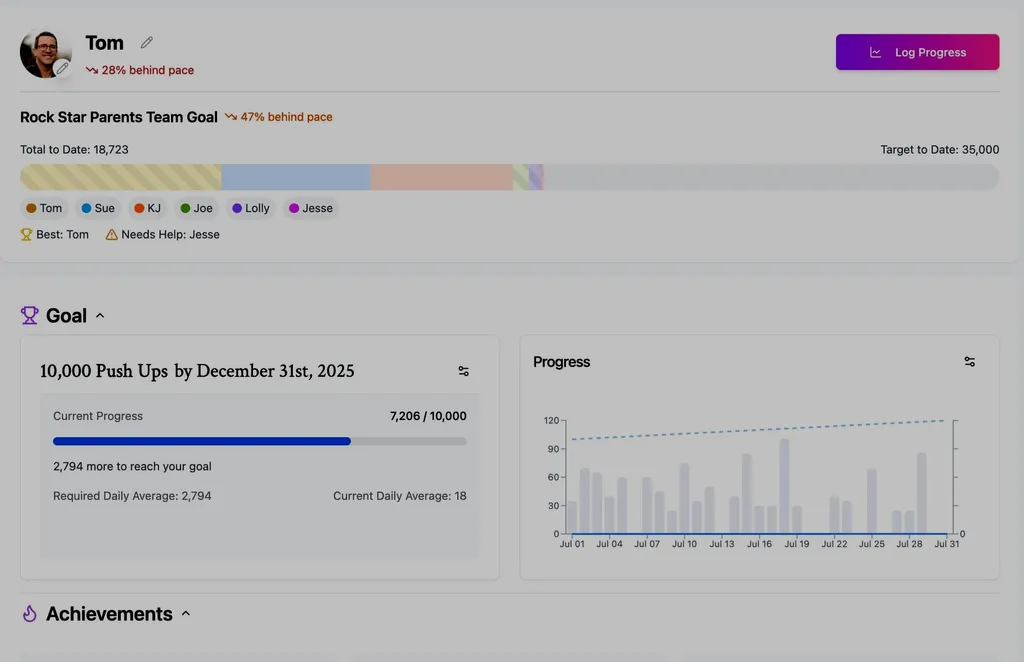
So I built FitFam.

The Problem Worth Solving
I needed to get back in shape after the surgeries. More specifically, I needed accountability, the kind that comes from other people knowing your goal and tracking alongside you.
The timing was almost deliberate. Right as I was recovering from the second surgery, Andrej Karpathy coined the term "vibe coding." I didn't know if the AI tools were actually ready for a real build.
I mean by this point I had several other AI projects under my belt, the biggest that I actually launched were Aiko Raine and The Tickle Pickle, so I wanted to find out.
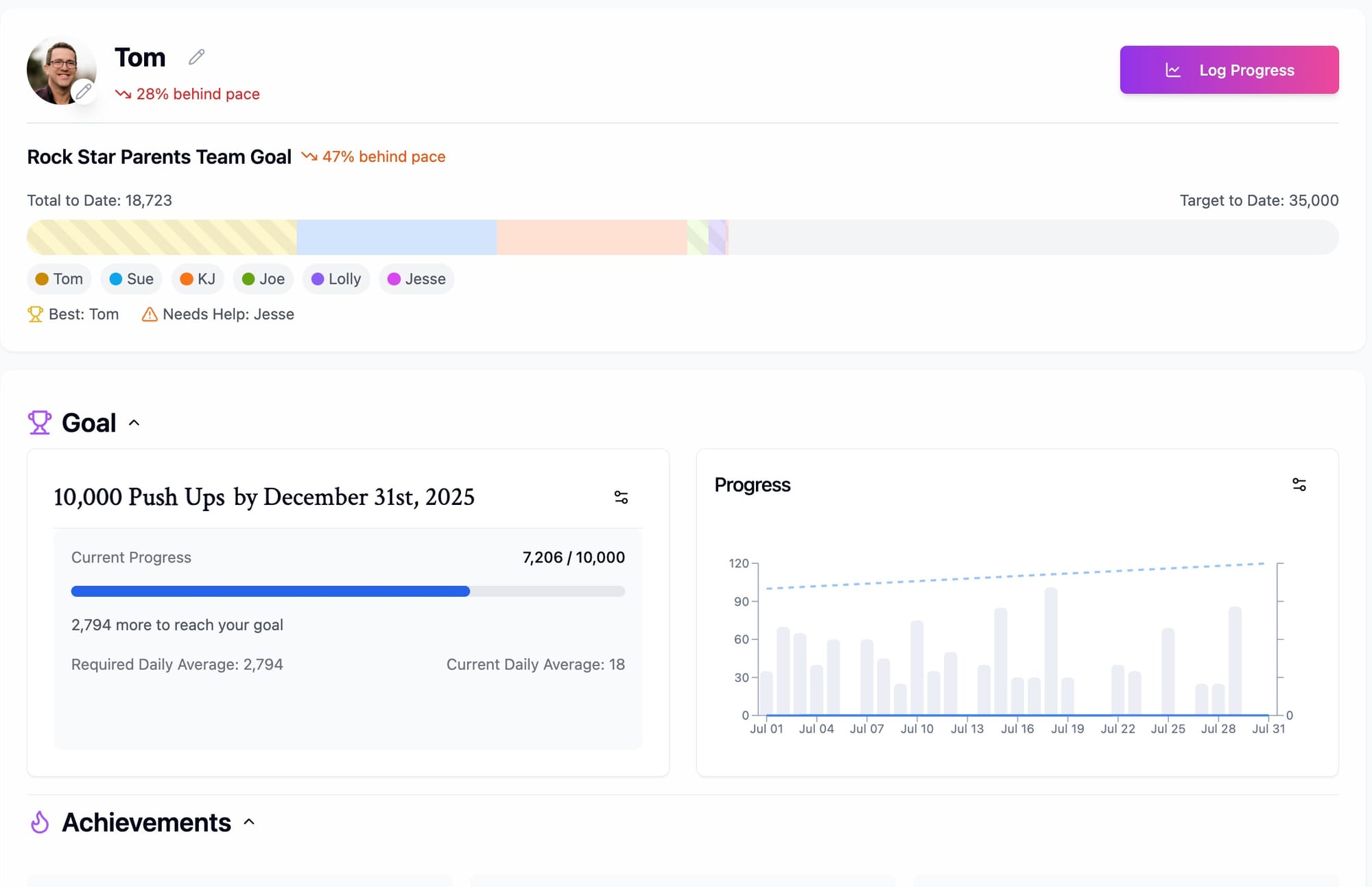
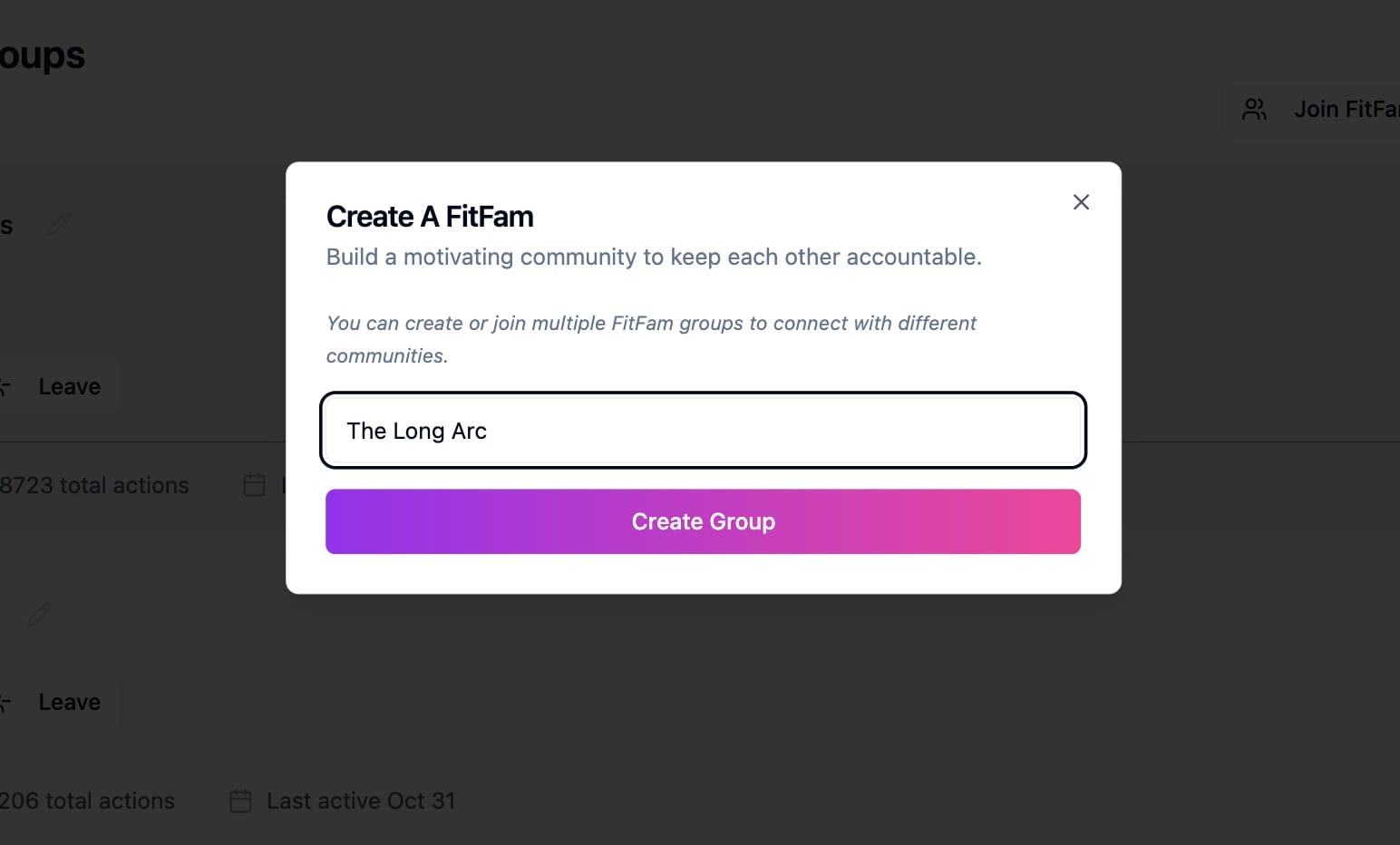
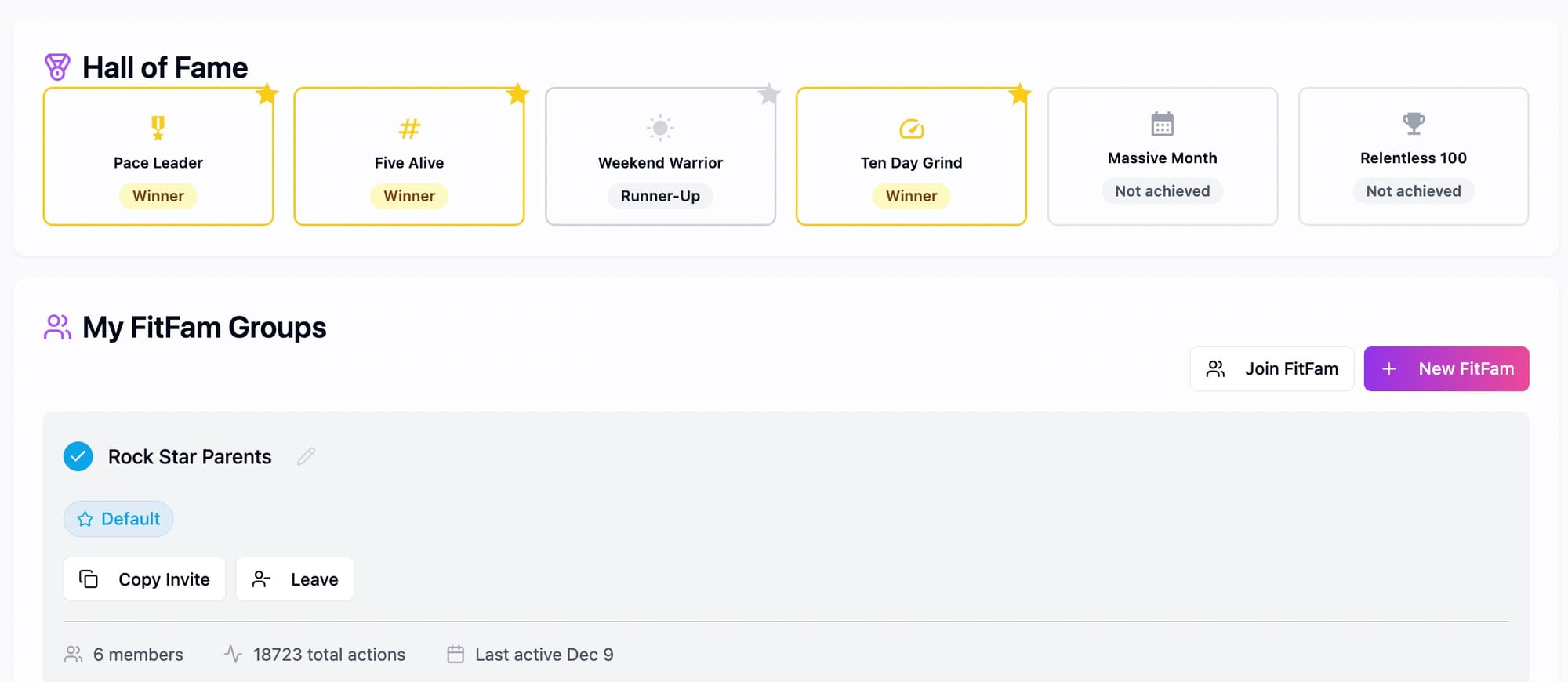
But as I built, the product evolved. The real insight wasn't individual accountability - it was social accountability. I added teams. Multiple teams. Friends, family, colleagues. Each team could see how every member was tracking toward their own personal goal.
Different goals, different activities, each with their own team dashboard of commitment.
What the AI Actually Did
I used Lovable.dev and Replit, wired up to Supabase on the backend. This was February 2025 so early days for this generation of vibe coding tools.
The unlock was when Lovable integrated directly with Supabase. Authentication and database setup have historically been difficult. Suddenly that friction was gone, or at least dramatically reduced, if you had the right knowledge to configure it.
Which I do.
But here's where the line was between my work and the AI's work: I had to be thoughtful about everything upfront. I needed to define:
- A chat function
- Gamification mechanics
- User structure
- User groups
- Different fitness types
- Different fitness goals
- Different target amounts
- Chart types
- How daily logging would work
That data structure work was manual. Today, AI can do most of that for you. A year ago, it couldn't. There was more thinking required from the beginning.
Once that thinking was done, the AI built out the components and wired everything together. The UI capability surprised me. When you stand on the shoulders of giants and use frameworks like Next.js and Tailwind CSS, building modular components becomes straightforward.
But I still had to prescribe a lot: how to structure Next.js components, how to style with Tailwind, core programming philosophy. BTW, today it does most of that automatically.
Two Weeks Then, One Afternoon Now
It took a few hours a day over roughly two weeks to get FitFam to a functional, shareable state. That was the cost of entry in February 2025.
The same build today would take an afternoon.
Not two weeks. An afternoon.
The capability jump in twelve months is hard to overstate. The tools are more coherent. Context windows are larger. The agents understand intent better. Integrations are smoother. What required technical fluency and patient iteration in early 2025 is now accessible to people with far less background.
But here's the thing people miss: the skill didn't disappear. It transformed.
In February 2025, vibe coding required you to understand system architecture, data modeling, and how to course-correct when the AI output was wrong. You needed technical sensibility. You had to work with the AI, not just delegate to it.
The barrier didn't lower. It changed.
Today, the barrier is different again. The tools caught up to the promise. What used to require deep technical background now requires clarity of thought and architectural vision. You still need to know what you're building and why—but the syntax mastery matters less.
What This Means
I'm starting to see a pattern: tools are evolving faster than developer mental models are updating.
Most developers are still thinking about AI coding tools the way they worked in early 2024, interesting but not serious. They haven't run the experiment. They haven't built something real under constraint and measured what actually happened.
The shift is not about democratization. It's about transformation.
The role of "developer" is changing from code writer to system designer. From syntax expert to architectural thinker. From implementation specialist to integration orchestrator.
If you had the skills in February 2025, you could build real things with AI assistance. Now, almost anyone with clarity of thought can do the same.
For those who were wondering no I did not hit my 10,000 push-up goal because in early November I injured my arm so I only got to 7,200 but still pretty great as far as I'm concerned.
The question is: are you updating your mental model as fast as the tools are updating their capabilities?


