


The Funnel That Doesn't Leak: Building Customer Acquisition That Actually Scales
Most founders pick a sales methodology like they pick software — someone recommended it. The mismatch with your actual business model is where growth quietly dies.

Phase 3 — Growth & Scaling
How to read the market, own your category, sell with a system, build a funnel that converts, and engineer growth people actually share.
It is a Serial Entrepreneur's Playbook From Idea To Long-Term Success.
Advertising Strategy Ace
Designed to help build a comprehensive sales funnel, and develop a targeted AERO ad campaign strategy to enhance customer acquisition and retention.
Most companies spend money on advertising before they understand their funnel. Then they wonder why the economics don't work.
The pattern is consistent. A founder finds product-market fit, starts running ads, generates traffic only to watch conversion rates sit stubbornly below expectations. So they spend more. They tweak the creative. They A/B test the headline. What they rarely do is step back and ask a harder question: where exactly in the journey from stranger to paying customer is the system breaking down?
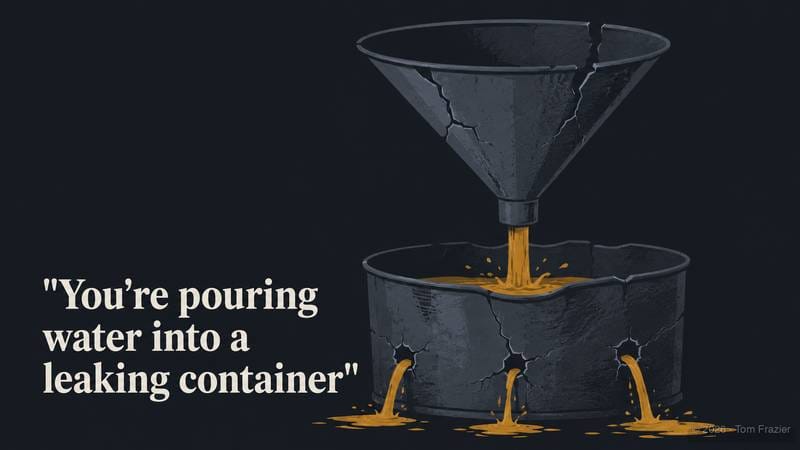
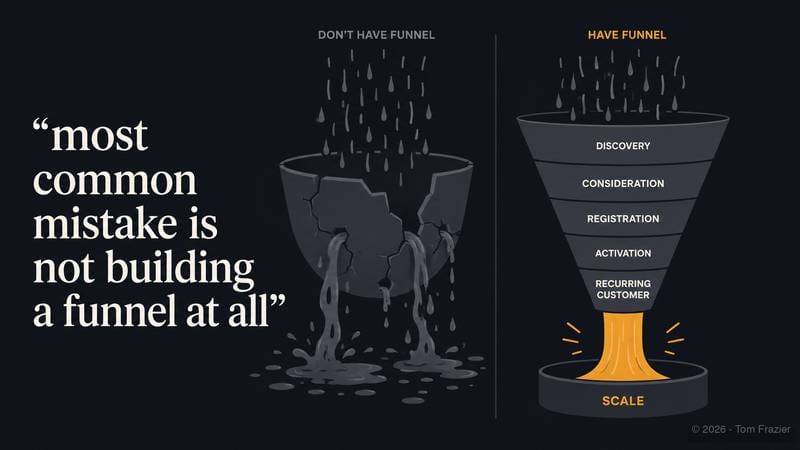
Running ads without understanding your funnel isn't a marketing problem. It's a physics problem. You're pouring water into a leaking container and wondering why it's not filling up.
This article introduces the AERO model — Awareness, Education, Retargeting, Offer — as a framework for designing customer acquisition as a system, not a series of ad campaigns.
It maps eight specific campaigns to the five stages every customer moves through.
And it gives you the diagnostic lens to find your leaks before you pour in more budget.

Download the free AERO reference sheet including all eight campaigns, five stages, and the diagnostic framework to use anytime.
No email required.
The Five Stages Your Customer Actually Moves Through
Before any campaign gets built, you need a map of the journey. Not the journey you wish customers took... the one they actually take.
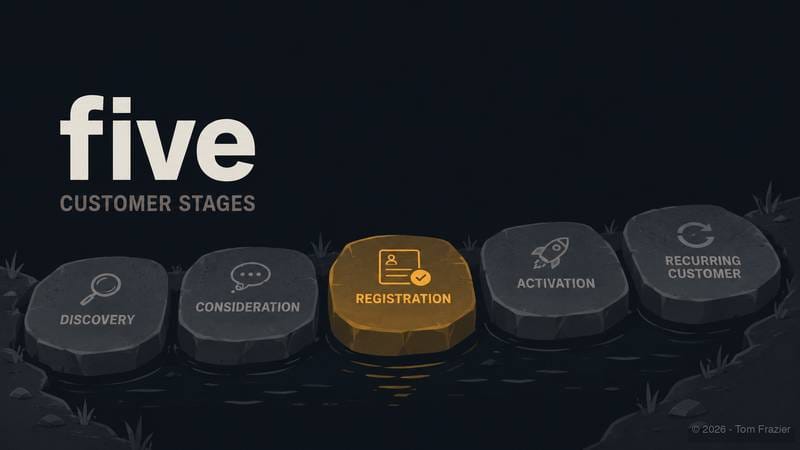
Every customer moves through five stages:
The customer doesn't know you exist yet, or doesn't recognize the problem you solve. They're reached through paid media, long-form content, search, or in-person presence. This is where most advertising budgets go and where most companies focus exclusively.
The customer knows you exist and is evaluating you. They're on your site, reading your content, comparing you to alternatives. Owned media, email campaigns, testimonials, and third-party validation all work here. The job is to reduce friction and build credibility.
The customer decides to take a first action... a sign-up, a trial, a booking. This is the moment of truth:
"This business solves several pain points I have."
Getting someone to the registration page is not the same as getting them to register. There are objections at this stage that most companies never explicitly address.
The customer uses your product or service for the first time. Another moment of truth:
"This worked better than expected."
A surprising number of companies invest heavily in acquisition and almost nothing in this stage then wonder why retention is low.
The customer uses your product again, expands their spend, or refers others. The final moment of truth:
"Am I getting the most out of what this company offers?"
This is where raving fans are made or where you lose customers to a competitor who bothered to follow up.
These stages matter because every campaign you run should be designed for a specific stage, not for "customers" in the abstract. A cold audience in the Discovery stage has completely different needs (and different objections) than a registered user who hasn't yet activated.
Most ad accounts look like a mess because they weren't built around this map. They were built around whatever the marketing team thought sounded good this quarter.
The AERO Model: Four Campaign Categories, Eight Executions
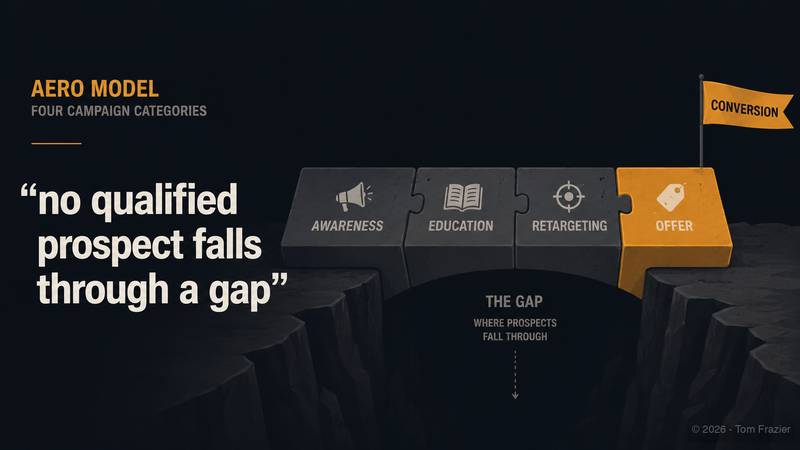
AERO organizes your entire customer-facing strategy into four categories that correspond to where a customer is in their journey. Each category has a specific job. Together, they create a system where no qualified prospect falls through a gap.
Captures people at the Discovery stage, both those who don't yet recognize the problem (Problem Awareness) and those who know they have a problem but haven't found your solution (Solution Awareness).
Moves prospects through Consideration. It's the bridge between "I've heard of this company" and "I trust this company enough to register."
Works at the gaps... the customers who've visited but haven't registered, and the registered users who haven't yet activated. These are your warmest prospects. Most companies either ignore them entirely or run the same creative they showed everyone else.
The last resort, not a lead strategy. It's used only when a prospect has engaged with multiple campaign layers but hasn't converted within an expected timeframe. This is where a discount, trial extension, or compelling testimonial can close the loop.
The right channel to use depends on the stage, not the budget. Here's how Meta, TikTok, Search/AEO, YouTube, Programmatic Display, Email, SMS/Push, LinkedIn, and Organic Social align to each layer of the AERO model.
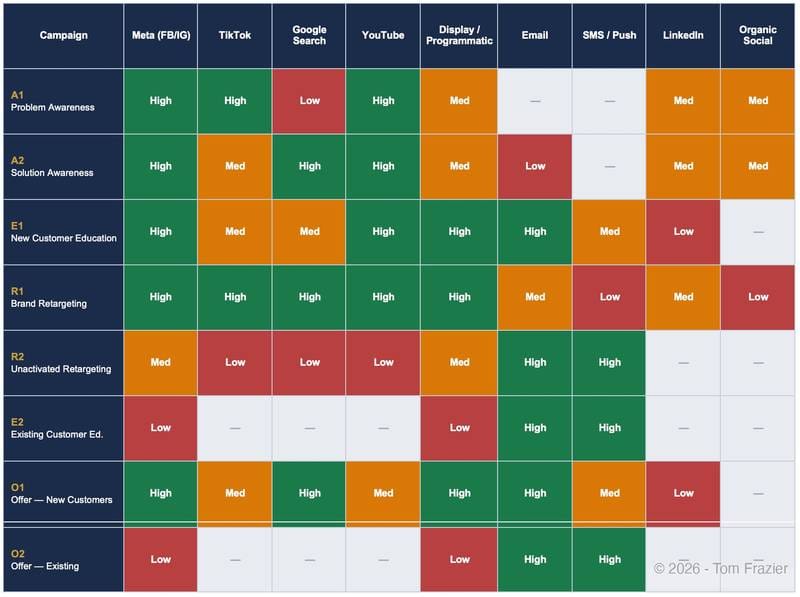
Here's how those four categories map to eight specific campaigns.
The Eight Campaigns
Awareness 1 — Problem Awareness Campaign
This is the top of the funnel in the truest sense. The audience doesn't know they have a problem or doesn't frame their frustration as something a product can solve. The job of this campaign isn't to sell your solution. It's to surface the pain.
A SaaS product that optimizes credit card spending might run a TikTok campaign: "Do you know how much you're paying in fees every month?" — paired with a video showing a pile of credit card statements. No product pitch. The call to action leads to a landing page that elaborates on the problem. The prospect either self-identifies or scrolls on.
The metric that matters here is cost per problem-aware visit, not conversion rate. You're building the top of the funnel.
Awareness 2 — Solution Awareness Campaign
This audience already knows they have a problem. They're in comparison mode. The job of this campaign is to position your solution as the right answer.
The same credit card SaaS might run: "It's like a free vacation every year" — user-generated content showing a beach holiday funded by accumulated savings from fee optimization. The destination is a page that explains the solution and connects the benefit to the specific problem they've been experiencing.
The conversion metric here is click-to-registration-page. The A2 audience is warmer than A1, they've been looking for something. Make it easy for them to find it.
Education 1 — New Customer Education Retargeting Campaign
These people know you exist. They're not converting. That means there are objections you haven't addressed.
Run two campaign variants here:
Education 1-A
Education on the benefits promised in your moment-of-truth messaging. If your product delivers peace of mind, show them specifically what that looks like in practice with the destination set to a landing page that articulates that outcome in detail.
Education 1-B
Customer testimonials. Not brand statements, real customers describing the experience after activation. Direct them to your homepage or a dedicated social proof page. The goal is to reduce the perceived risk of registering.
These campaigns should be narrowly targeted: only to people who've already visited from Awareness campaigns. Broad targeting here wastes budget on audiences who've never encountered your brand.
Retargeting 1 — Brand Awareness Retargeting to Non-Customers
They've seen your solution. They've seen testimonials. They haven't converted. That usually means one of two things: the objection wasn't resolved, or they got distracted and forgot.
This campaign runs across all major platforms not because you expect every channel to convert, but because if a prospect searches for your company name on any platform, they should see your brand. This closes the loop on people who are genuinely interested but navigating toward registration at their own pace.
The job of this campaign is simple: stay top of mind and resolve residual objections before the prospect disappears.
Retargeting 2 — Retargeting Solution Awareness to Unactivated Customers
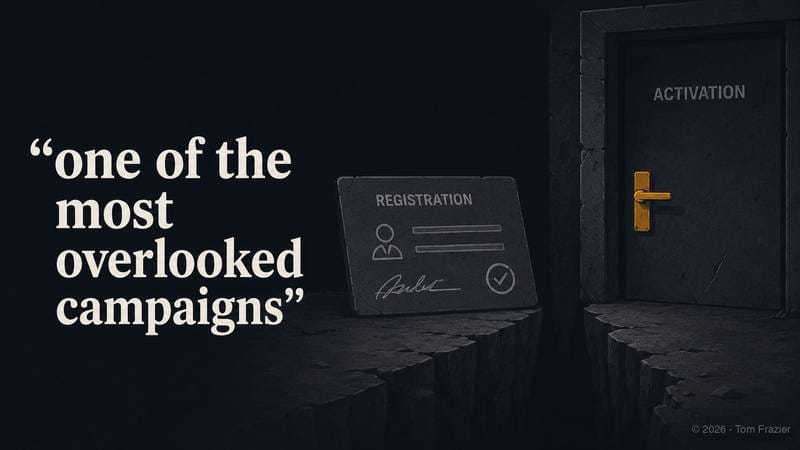
This is one of the most overlooked campaigns in most ad accounts. The customer has already converted — they've signed up, they've demonstrated intent — but they haven't activated. That gap is not a product problem. It's a communication problem.
Run this campaign across all platforms to recapture these users and get them into their first product experience. The messaging should emphasize the specific outcome they signed up to achieve. Don't reintroduce the brand or explain what the product does. They already know. Just remove whatever friction is sitting between them and the first use.
Research consistently shows that upselling to existing customers is 68% more affordable and effective than acquiring a new one which makes unactivated customers a particularly high-value target. They cost nothing to re-market to relative to cold acquisition.
Education 2 — Education for Existing Customers (Retargeting)
This campaign creates the Recurring Customer moment of truth:
"Am I getting the most out of what this company offers?"
The goal isn't upselling for its own sake. It's ensuring the customer discovers capabilities that are already relevant to them. Done well, this campaign is experienced as helpful, not commercial. Done poorly, it looks like spam.
Use activation data to segment: only customers who've had a verifiable first-use event but haven't explored adjacent features or offerings. The creative should be specific to what they've already done and what they're likely to want next.
Offer 1 — Offer Campaign: New Customers
This campaign is a last resort, not a lead strategy. It exists for one specific scenario: the prospect who has been through the full funnel and still hasn't converted. Something is still blocking them and a well-structured offer can remove that blocker.
Two variants here mirror the E1 campaign: one focused on outcomes and moment-of-truth language, one built around testimonials. The offer itself might be a trial extension, a first-month discount, or a risk-reversal guarantee. Whatever lowers the perceived cost of saying yes.
Research shows that nurtured leads make 47% larger purchases than non-nurtured leads — but only if you've actually nurtured them. A cold offer presented to someone who's only seen one campaign is just spam.
Offer 2 — Offer Campaign: Existing Customers
The same principle applies on the customer side. If an activated customer hasn't expanded their relationship with your product — hasn't referred, hasn't upgraded, hasn't triggered the repeat use moment of truth — this campaign is a last-effort prompt.
The creative should be specific to their usage context: what they've already done, what outcome they're presumably trying to achieve, and what a deeper engagement would unlock for them. This is not a discount campaign. It's a reminder of unrealized value.
Finding the Leak Before You Spend More
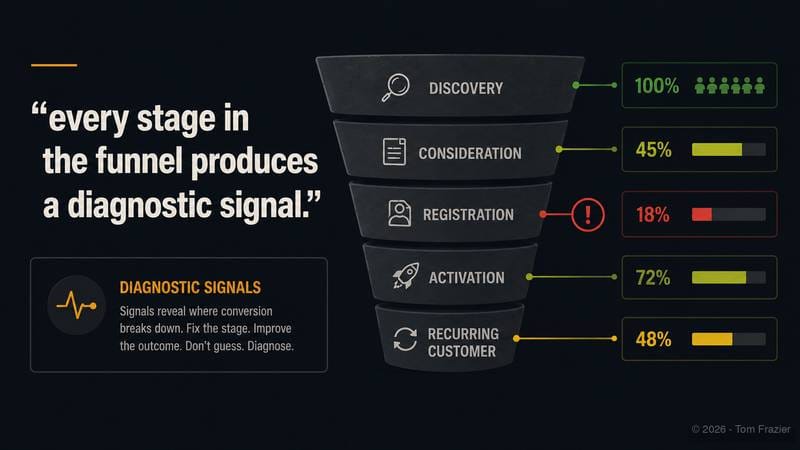
Every stage in the funnel produces a diagnostic signal. If your numbers are off, the stage with the biggest drop-off is where the system is broken... not everywhere simultaneously.
Discovery to Consideration
High ad spend, low site visits or high bounce rate. The problem is audience targeting or message-market fit. The campaign is reaching the wrong people, or the creative isn't resonating.
Consideration to Registration
Visitors are arriving but not converting. The objection hasn't been addressed. Deploy E1 campaigns and audit your registration landing page for friction.
Registration to Activation
Signed-up users aren't using the product. This is a product onboarding problem and R2 campaigns can buy time while you fix it.
Activation to Recurring
Users tried the product but didn't come back. Either the first experience underdelivered or they don't know what to do next. E2 campaigns and proactive outreach are the lever.
The average CAC for B2B SaaS businesses stands at $239 in 2025. If you're spending anywhere near that per customer and your activation rate is 60%, you're effectively paying $400 to acquire each active user.
Fixing the funnel is more valuable than increasing ad spend.
What Most Companies Get Wrong
The most common mistake isn't building a bad funnel. It's not building one at all.
Most strategies are structured around campaigns and creative, not around customer stages. There's a top-of-funnel awareness campaign, maybe some retargeting, and a conversion campaign. The five stages and their specific objections are never mapped. The eight AERO campaigns are compressed into two or three undifferentiated executions that try to do everything and end up doing nothing well.
The second most common mistake is treating the offer as the primary acquisition tool. Companies lead with a discount when they haven't done the work of Awareness and Education. A cheap offer to an cold audience doesn't acquire loyal customers; it acquires bargain hunters who churn at the first renewal.
The third mistake is abandoning customers after registration. The retargeting / education / offer campaigns exist because the relationship doesn't end at the sale. The funnel extends post-conversion, and the economics of retention are dramatically better than the economics of acquisition.
If your funnel diagram ends at the purchase event, you're leaving money and compounding growth on the table.
This isn't the most glamorous part of building a company. Mapping five stages, designing eight campaigns, and diagnosing where conversion breaks down is real work. It's also the work that separates companies with scalable unit economics from companies that run ads and hope.
Build the system. Find the leaks. Then scale.
This is the fourth article in Phase 3 — Growth & Scaling. You can access the AI tool below.
Use the Advertising Strategy Ace GPT to build a funnel that doesn't leak. A free AI tool just for subscribers. ⤵️
This article is why I built the Advertising Strategy Ace GPT. It is designed to help build a comprehensive sales funnel, and develop a targeted AERO (awareness, education, retargeting, offer) ad campaign strategy to enhance customer acquisition and retention.
Maximize your market reach and conversion rates.
Common Questions About Advertising Strategy Ace
Isn't specialized advertising too complex for my small business?
Specialized advertising can be tailored to suit businesses of all sizes, offering scalable and adaptable strategies that grow with your business.
How can I be sure these strategies will work in my industry?
The Advertising Strategy Ace strategies are based on a wide range of industry knowledge and can be customized to fit specific market dynamics and customer behaviors in various industries.
Are high-tech advertising solutions out of my budget?
Advertising Strategy Ace solutions are designed to maximize ROI, offering cost-effective options and scalable strategies to suit different budgetary constraints.
Will it take too long to see results from these advertising methods?
Advertising Strategy Ace strategies are focused on both short-term wins and long-term growth, ensuring businesses see timely results while building sustainable success.
I'm worried about losing my brand's voice in automated advertising.
Advertising Strategy Ace strategies prioritize maintaining brand integrity, ensuring that all campaigns resonate with your brand's unique voice and message.
Access Advertising Strategy Ace GPT