

I Spent Hard Cash Breaking OpenClaw. Here's What Weeks of Wreckage Taught Me.
Designing a Charter document for my OpenClaw digital-twin organization has become the most important artifact in my stack — not because of what it contains today, but because of the discipline it forces on every build decision that follows.
I have never been this excited about technology. Period. Full-stop.
Not when the web opened up commerce. Not when mobile put the internet in everyone's pocket. Not even when Bitcoin showed us what decentralized trust could look like (although ₿ is still a very close second).
This is different. And I think most people are still misreading what's actually happening.
The Shift Nobody Saw Coming
December 2025 changed everything. Vibe coding became agentic development almost overnight.
Custom GPTs felt like progress for a while and I have built dozens of them used by thousands of people.
I could configure responses, set contexts, build workflows. But I was still doing all the work — just through a fancier interface. The model was a tool. I was still the operator. Those custom GPTS have been the bridge but OpenClaw is the other side.
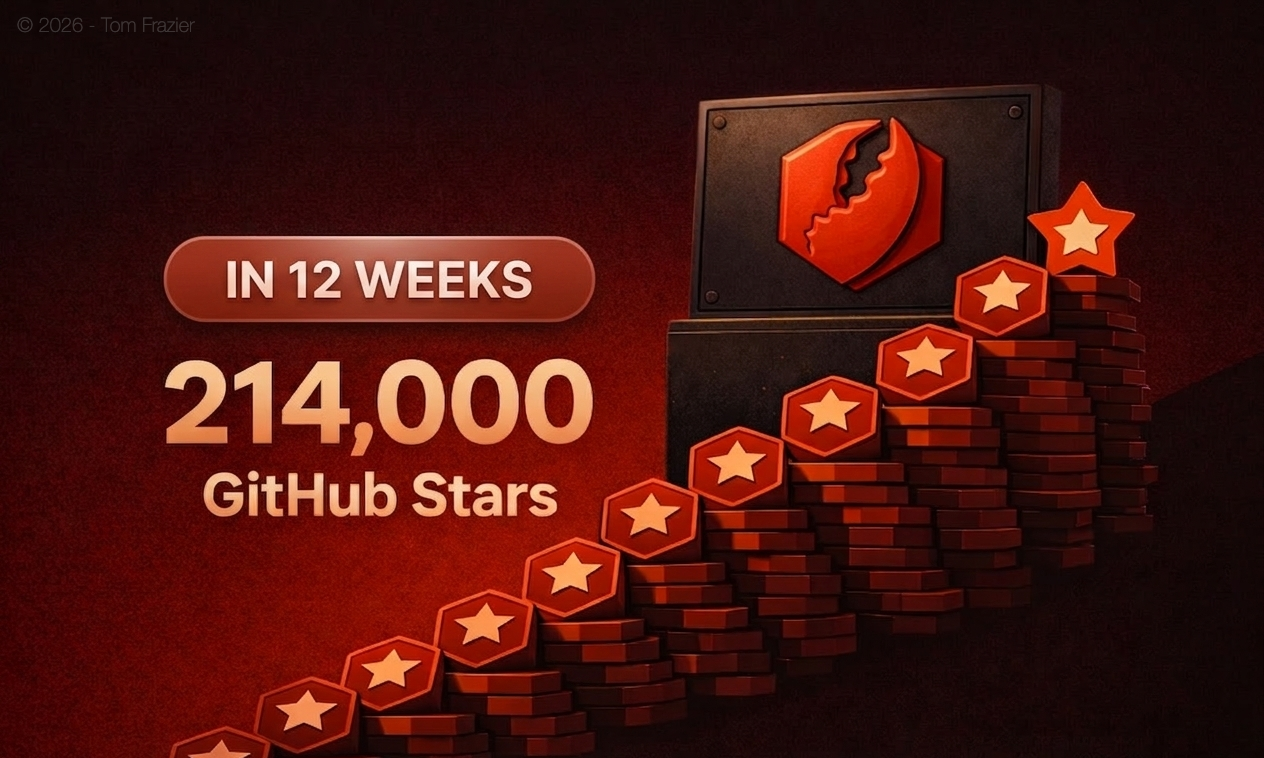
The platform launched in November 2025 and hit 9,000 GitHub stars in 24 hours. By February 2026, it crossed 214,000 — faster than Docker, Kubernetes, or React ever grew. Between 300,000 and 400,000 people are using it now.
Those numbers don't lie. Something real is happening.
Why I Couldn't Look Away
I became an early adopter in January 2025. I've reinstalled it at least five times. Spent hundreds on API tokens. Watched custom skills get deprecated within days of finishing them. Dealt with broken core features on a weekly basis.
Every minute with OpenClaw has been worth it.
The reason took me a few weeks to articulate clearly: OpenClaw puts me in control of something that previously required enterprise infrastructure or VC-backed platform access to build at all.
VC dollars subsidize token costs at the big platforms. The access is cheap. The trade-off is that my conversations become training data. My memory becomes their moat. My intellectual property — some or all of it — gets locked away within the model provider.
That never sat right with me.
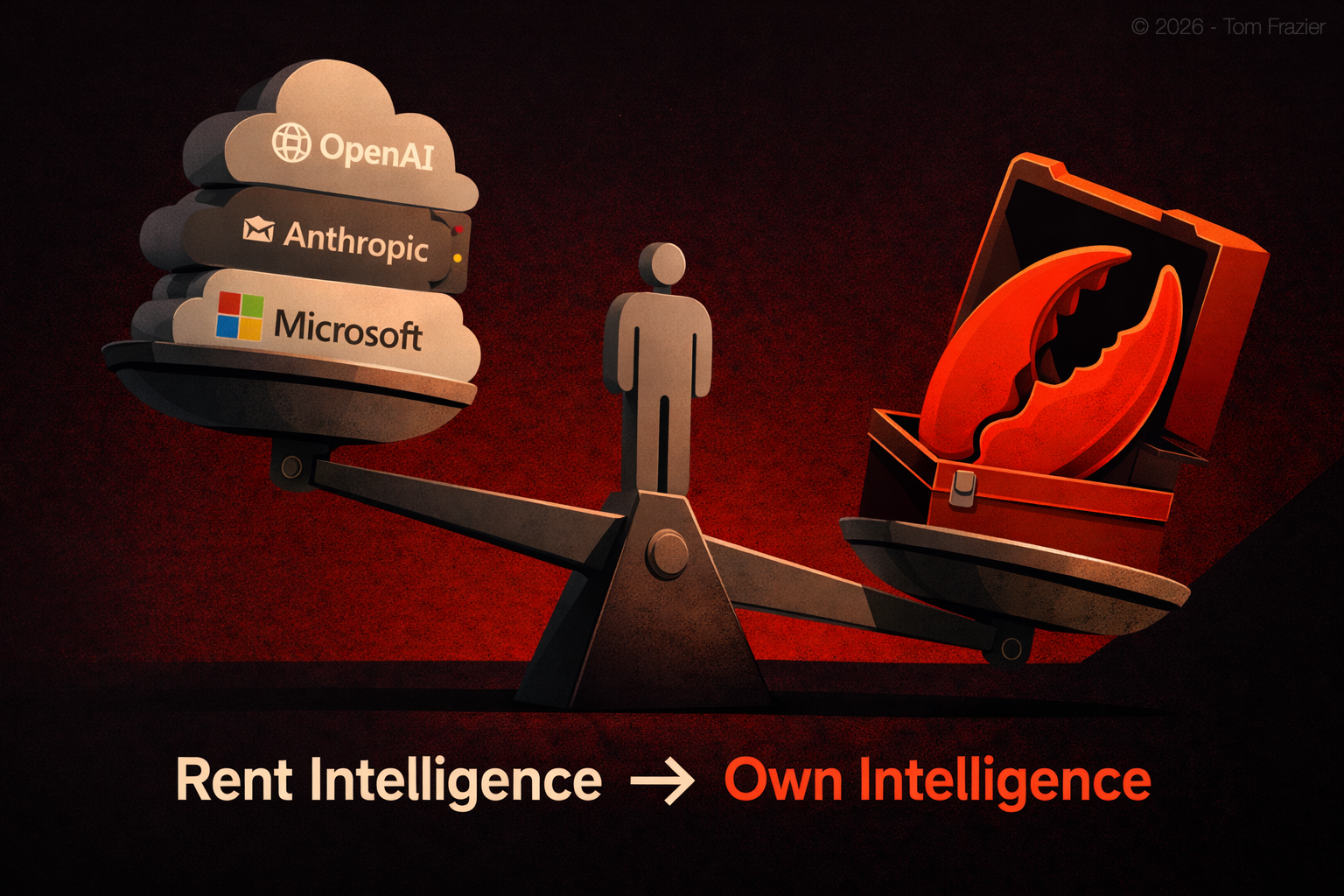
IBM Research scientists who analyzed OpenClaw concluded it challenges the assumption that autonomous AI agents must be vertically integrated. They found that an open-source orchestration layer with full system access can be "incredibly powerful" — and that creating agents with true autonomy is no longer limited to large enterprises. It can be community-driven.
That architectural choice matters more than most people realize. The difference between renting intelligence and owning will likely be the determining factor of future success.
Owning intelligence instead of renting it is also why I am bearish on just using Claude Code. While it is great it doesn't solve the underlying ownership inequality.
What Makes an Agent Actually Agentic
Chatbots respond to queries. Agents execute tasks.
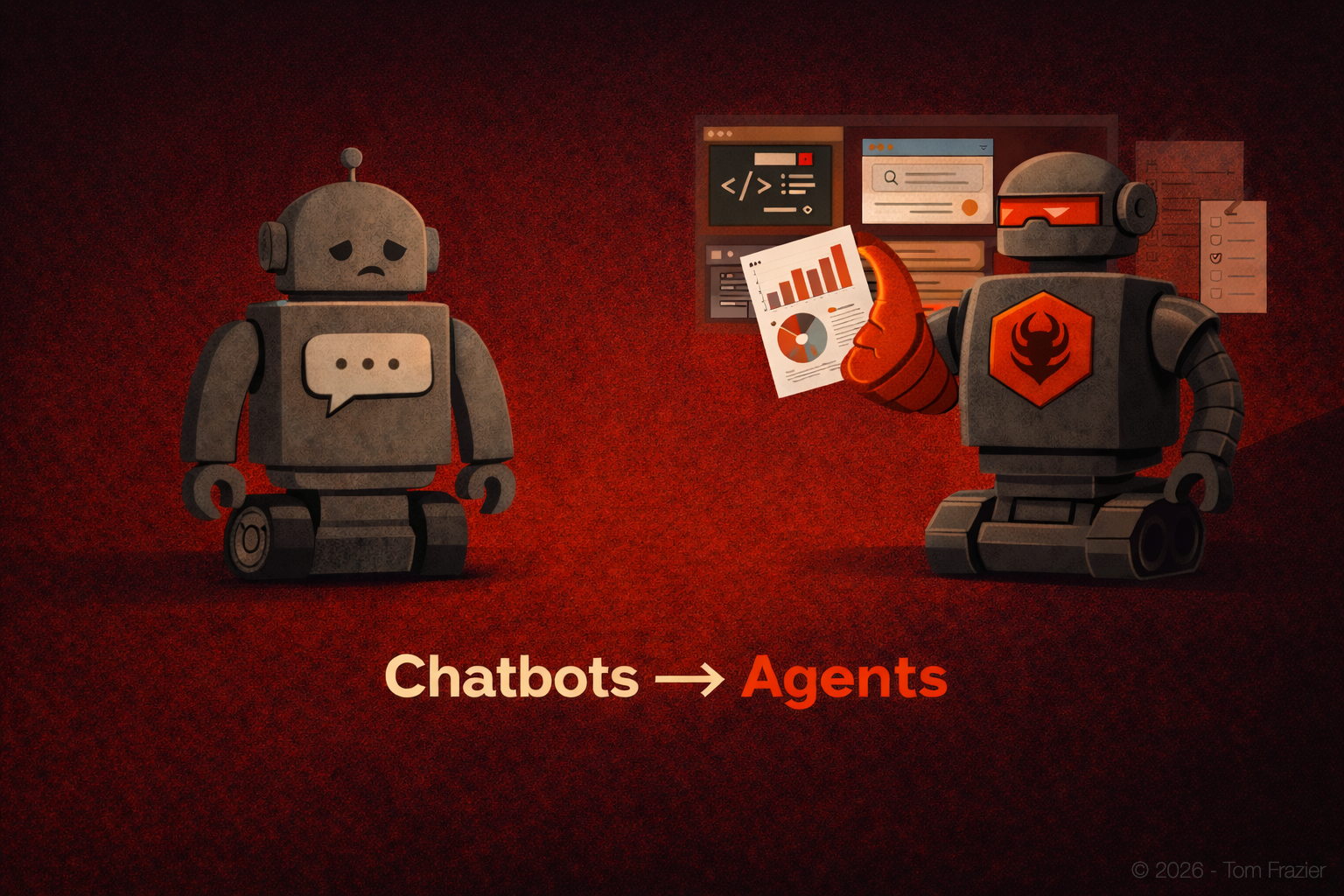
Right now OpenClaw uses Codex to write software for me. It helps me build goals. Solves problems. Maintains memory across sessions. It does real work in the real world without me holding its hand through every step.
The ClawHub registry now hosts over 700+ community-built skills — Gmail, GitHub, Spotify, Obsidian, YouTube, even crazy crypto trading. A complete skill can be as little as 20 lines of code. That is why the ecosystem exploded so fast. The technical barrier dropped low enough that builders could actually build.
Early users described it like running Linux versus Windows 20 years ago. I am in control. I can modify it, extend it, make it mine — instead of waiting for some tech giant to decide what I'm allowed to do.
The Trainwreck Was Expected
I am not going to pretend this has been smooth.
Core features break. Reinstalls happen regularly. API costs compound fast when running experiments across multiple models without detailed cache control mechanics.
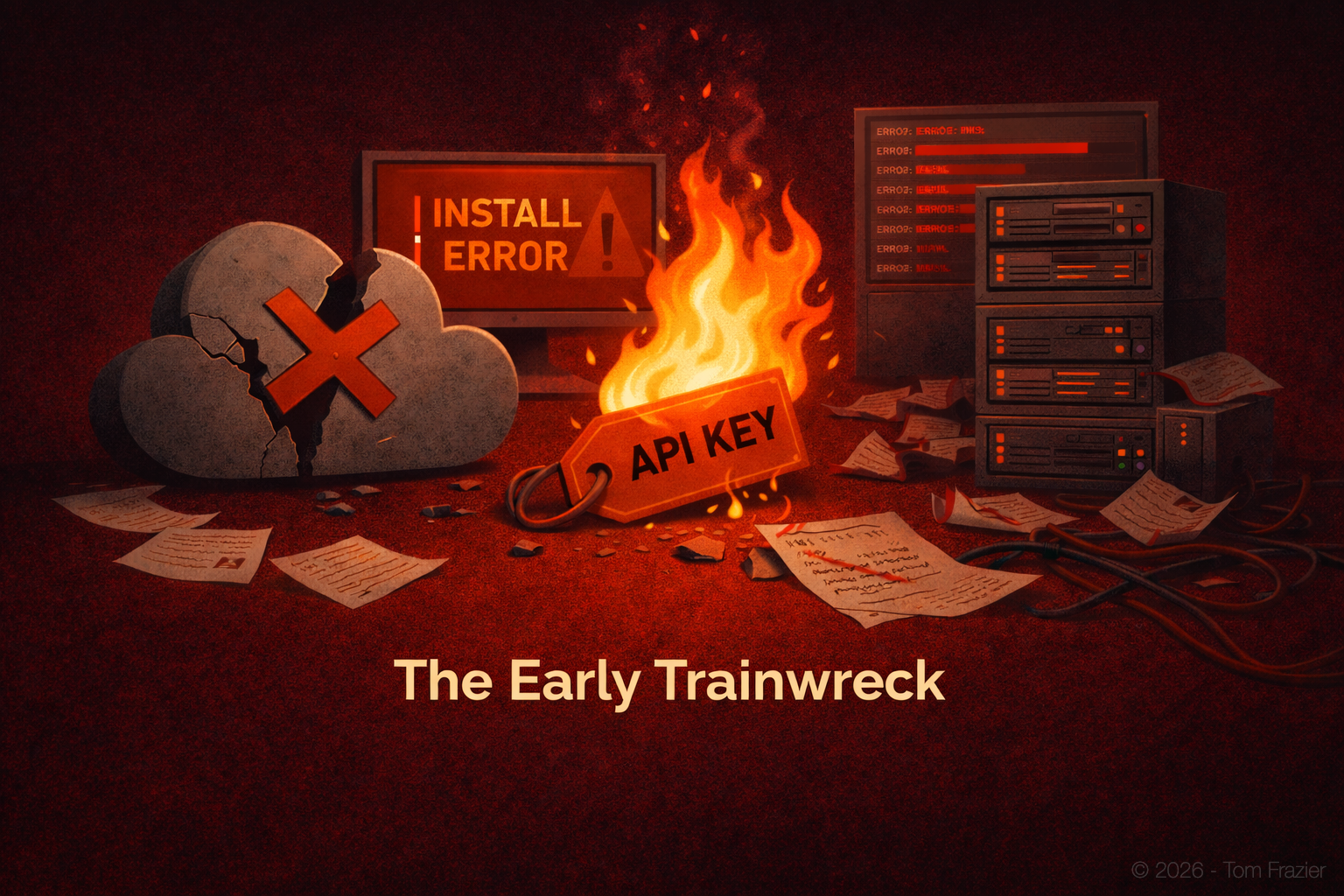
But this is what early looks like. And the mess forced me to do something I wouldn't have done otherwise:
I had to think through what I actually want from this system before I built it.
That distinction — principles before systems — is where most people skip ahead and pay for it later.
The Principles That Survived
After weeks of iteration, here's the operating framework I've settled on.
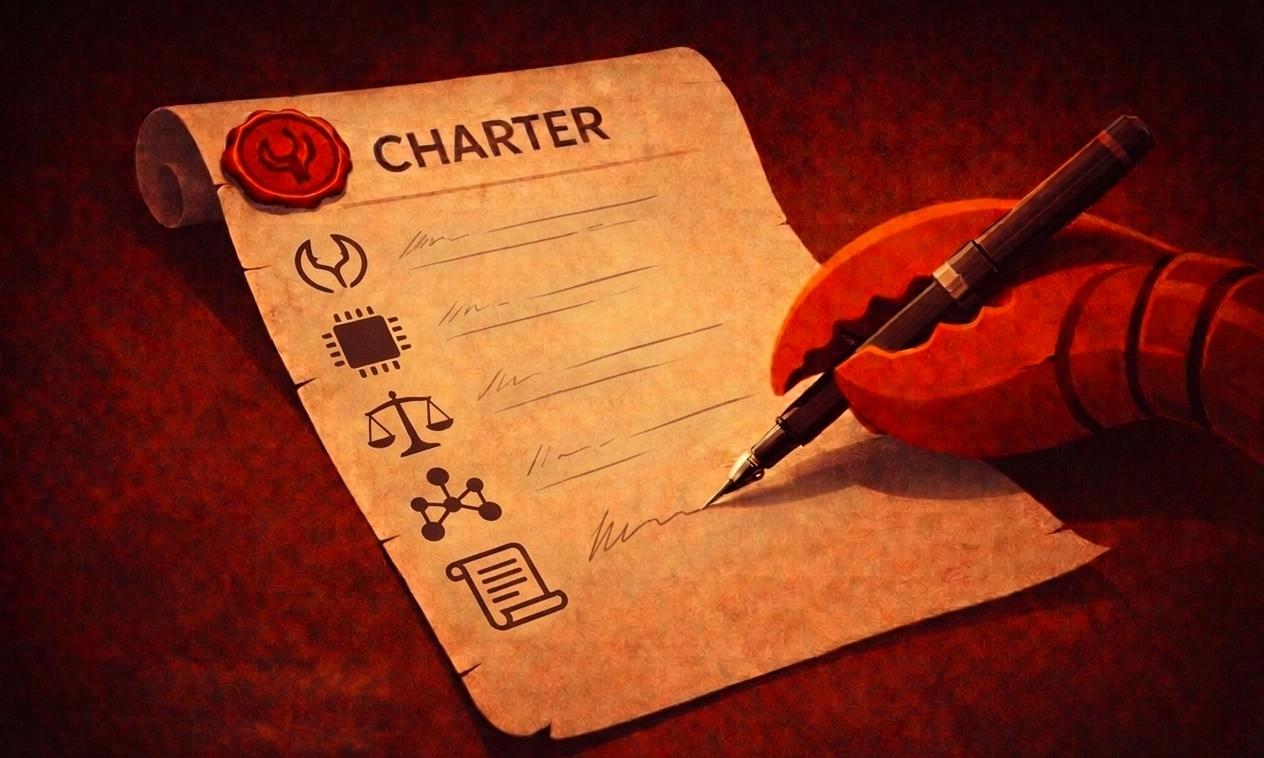
Operate a charter which is my main control point.
I used Claude to help me draft a Charter for my digital-twin organization. Something I can reference and expand as the system matures.
That document has become the most important artifact in my stack
not because of what it contains today, but because of the discipline it forces on every build decision that follows.
Do work for me, and when needed, with me.
Not just answer questions. Execute tasks. The agent must be capable of independent action when trust is established.
Escalate early until trust is built, then expand autonomy.
Trust compounds through demonstrated competence, not through assumptions. Each domain needs to earn its own track record.
Build a memory system I own.
My cognitive history is mine. I let OpenClaw manage it. I share context with AI models only when and as needed — no platform gets my full operational history by default.
Use multiple models based on task type, cost and value gained.
Different jobs need different tools. Optimization happens at the task and team level, not the platform level. Spending hundreds on tokens taught me exactly where the waste lives.
Break functions into discrete agents.
Granular units let me measure cost, performance, and effort at the task level. I can't improve what I can't isolate. After all, agent definitions are free.
Build skills that teach the system to evolve.
Static configurations decay. Self-improving systems compound. "Teach the system to fish" model should outperform in the medium to long-term.
The end goal is governance, not management.
I want an AI CEO that represents me as a digital twin — something that knows my goals, constraints, preferences, and standards well enough to execute direction without requiring my hand on every decision.
How I Actually Built It
The setup evolved through iteration, not planning. I'm sure within a week of this article being published it will have evolved further but the components have staying power.
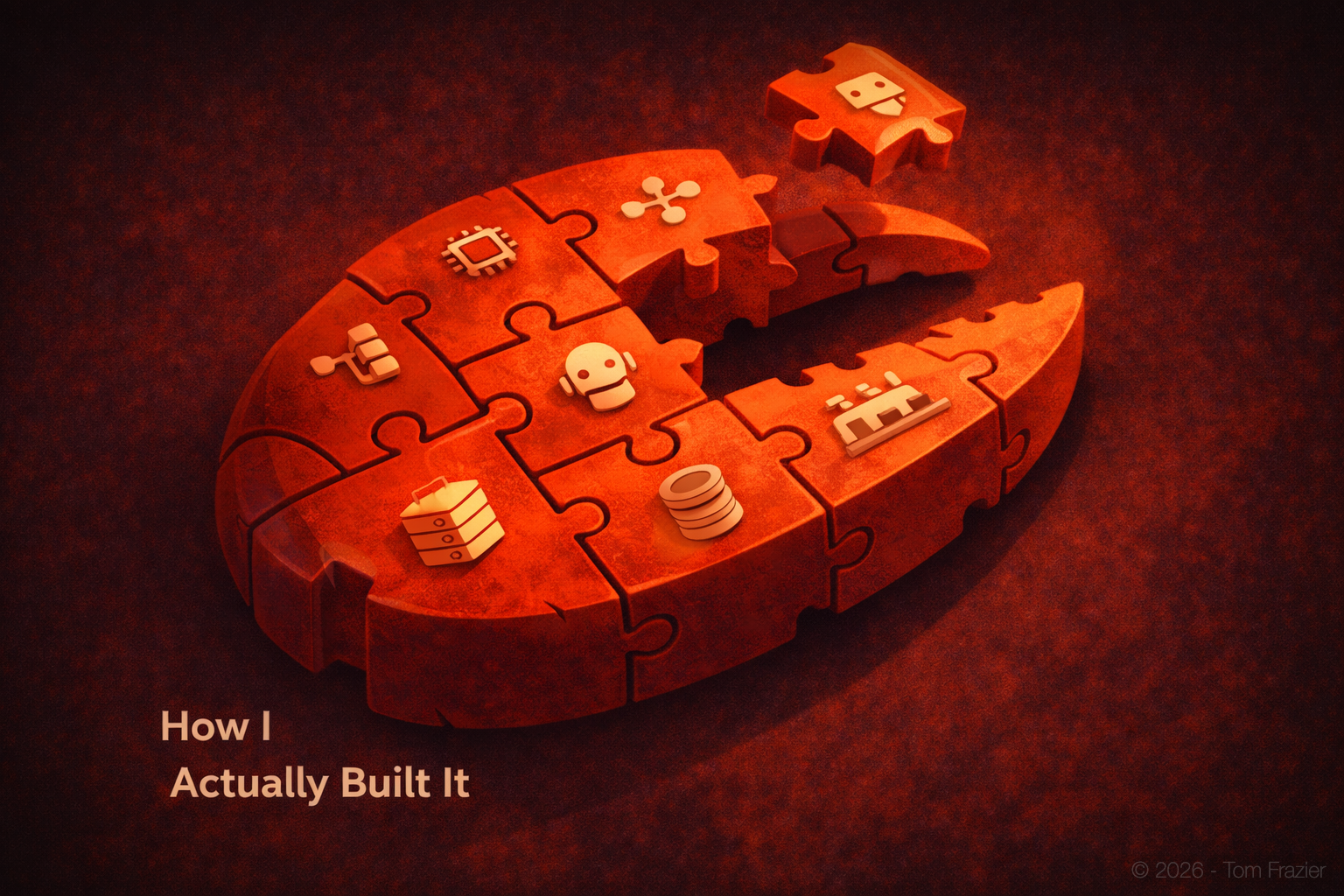
An isolated environment.
A cheap Mac Mini is dedicated hardware that keeps the system separate from daily work. No conflicts, no performance degradation when agents are running heavy tasks. This isn't a limitation — it's a deliberate execution decision.
Local LLM hosting for housekeeping.
Use Ollama as a single interface and the latest open source model (currently Qwen 3.5) that is capable of administering Open Claw itself (heartbeat functions and cron functions). It's free and without dependencies.
Tailscale for private network access.
Secure connection without exposing the system publicly. I can access the full stack from anywhere without compromising the perimeter. I use various web interfaces, tailscale ssh and Telegram.
Departments filled with agents, each with OKRs.
I built organizational structure that mirrors how I do real work. Content department. Development department. Research department. Parenting department, etc. Each has specialized agents with performance expectations — not just tools, but team members. I define an objective and key result which seems to be useful baseline construct.
Functional agents and Council agents.
Functional agents handle execution — content ideas, coding work, data processing. Council agents provide oversight — research validation, news monitoring, quality control. The separation matters. Not every agent should be doing everything.
Hybrid generalized / specialized memory.
This is where I spent the most time getting it right and I'm still not sure I have it nailed. The key decision was deciding on how I want use OpenClaw. I settled on both full-text and vector embeddings but it had to broad enough for a long-term commitment and contained enough so individual agents could focus their attention. LanceDB Pro seems to be the current best solution for the job. When the agent pulls context for a task, it retrieves what's relevant, recent and task aware — not just what's literally matching. That difference in retrieval quality is changing the quality of every downstream output. Automem is another great approach FYI.
Opportunistic reinforcement for self-improvement.
OpenClaw Foundry observes workflows, crystallizes patterns into tools, and upgrades itself to match how I operate. Jury is out if this is the long-term tool as results are measured over longer periods of time.
Weekly, monthly, quarterly reviews of digital me.
Regular cadence forces reflection. Patterns emerge. Adjustments happen when data shows what's working instead of when frustration peaks. Combined with the other components this is a simple skill that recaps things for me.
Domain-centric personal coaching (next on the list).
With the OKRs and the review systems in place the next step is to design a coaching program where I am over/under investing energy. This requires solid plumbing and only now do I feel I am no longer in quicksand so I'll give this some time...
What the Market Is Telling Us
(And What It's Not Saying Out Loud)
Deloitte found that 80% of the work in agent deployment gets consumed by data engineering, stakeholder alignment, governance, and workflow integration. Not prompt engineering. Not model tuning.
The unglamorous infrastructure work that nobody wants to write about.
That's where the real moat is being built right now. Not in who has the best model access. In who has built the operational discipline to actually run these systems at scale.
The people doing the painful early work are building pattern recognition that cannot be purchased later.
What's Evolving Faster Than I Can Keep Up
Skills.
I've built a lot of custom skills, some better than what's publicly available. But the community is now producing at a pace that matches or exceeds my best work. I'm switching to community-maintained skills or open-sourcing some of my skills because long-term evolution beats my perfected snapshot.
Self-learning systems.
This is where it gets genuinely wild. Years of experience compressed into weeks of prompting. OpenClaw Foundry is the front-runner project in a rapidly growing space. Watch it closely.
Orchestration frameworks.
I'm still torn on whether to build task work within OpenClaw or on top of it. Mission Control makes OpenClaw the organization itself — opinionated, structured, purpose-built. Paperclip is architecturally cleaner but earlier in maturity whose advantage is that it is easier to onboard not only my agents but even hire external ones with ease. Testing both, like both. Either could work but leaning toward Paperclip winning long-term based on the community velocity. The decision comes down to how much structure I want baked in versus how much I want to define myself.
Agent marketplaces.
Multiple platforms are emerging where anyone can buy or rent agents with proven track records. Non-technical users won't have to build any of this soon. They'll purchase outcomes. X402 is an early micropayment protocol that could power externalized agents — where agents earn reputations based purely on performance results, not personality or credentials.
For Those Who Don't Adapt
Here's a detail that stopped me mid-scroll: the inversion is already starting to happen. Rent a Human exists — a platform where humans act for agents, completing tasks that AI can't yet do autonomously. Humans as a service layer for AI systems. We crossed that threshold quietly.
That changes hiring, collaboration, and value exchange in ways we haven't fully thought through yet. But it's coming. I for one want to be on the value creation side of designing and owning these agents instead of working for them.
The Bigger Pattern
The reason this matters beyond the tooling is architectural.
We are at the early edge of a transition from AI as assistant to AI as operator. The difference is not just efficiency. It's about who controls the intelligence layer of a business — and a life.
Platforms want me inside their ecosystems. That's rational for them. Closed memory, proprietary tools, subsidized access — all of it is designed to make switching costs high enough that I stay. The value proposition is convenience in exchange for dependency.
Building my own system, owning my own memory, running my own agents — costs more upfront. It costs effort, iteration, and a tolerance for things breaking at the worst possible times.
But the compounding logic runs the other direction. Every system I own gets smarter over time on my terms. Every platform I depend on gets smarter over time on theirs.
Decentralized AI is valued at $12 billion today. The blockchain AI market is projected to grow from $6 billion in 2024 to $50 billion by 2030. Investors deployed nearly 200% more capital into decentralized AI in 2024 than in 2023.
The market is voting with real money. The direction is clear.
Where This Goes
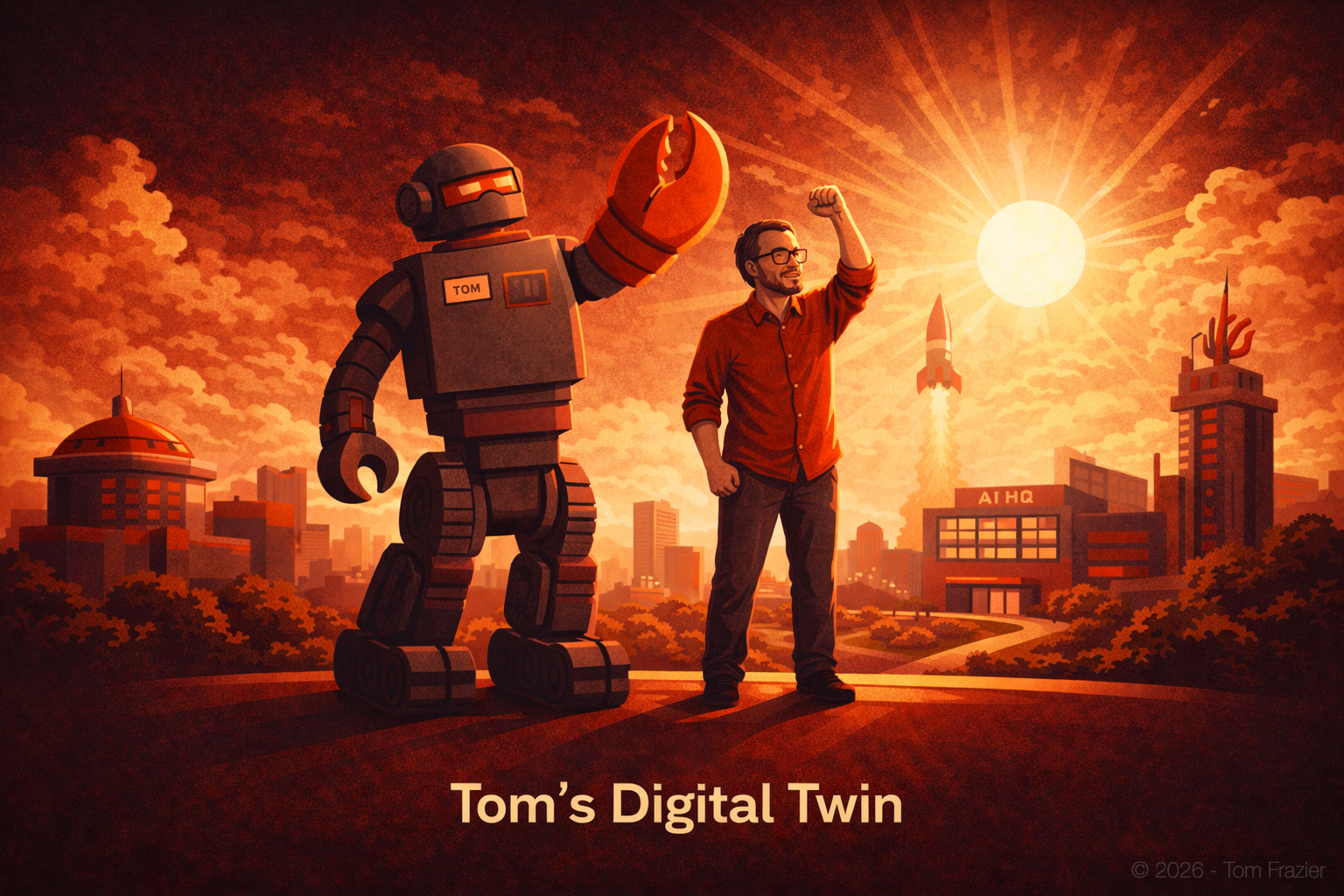
I know what I'm building toward:
an AI CEO that represents me as a digital twin.
Governance and orchestration handed over to a system that knows my goals, constraints, preferences, and standards well enough to execute direction without requiring my presence on every decision.
I define direction. The system executes.
That future is not decades away. For some use cases, it's months. The people building now — even while breaking things, burning through tokens, rebuilding from scratch — are developing the one thing that can't be replicated by waiting: earned intuition about what actually works.
The polished version will come. The people who wait for it will arrive after the territory has been mapped, walking paths that others discovered through failure.
The Long Arc of this technology bends toward user-controlled intelligence. The question isn't whether that future arrives. It's whether I'm building for it now, or planning to catch up later.
I know which side I'm on.